
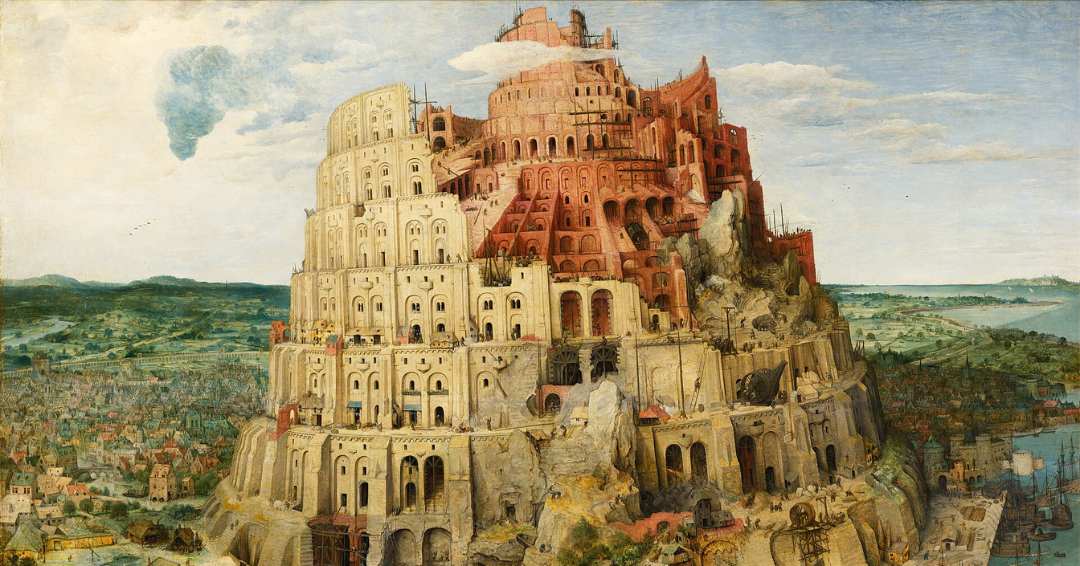
Credit by Pieter Brueghel the Elder
2026 will be another year of crisis, both as a turning point and as a disaster. The US midterm elections in November will be a critical test for the resilience of American democracy. The CIDOB research team predicts that 2026 will see a decline in freedoms and democratic quality on a global scale. According to the 2025 V-Dem report, the planet now has 91 authoritarian regimes versus 88 democracies. For the first time in decades, the ratio has flipped.
A growing alliance of tech billionaires is working to accelerate this trend. Not because they hate voting in principle, but because genuine democracy might impose limits: on wealth, on extraction, on the fantasy of endless growth. Some of those who hate democracy wear suits, talk about 'innovation' and 'progress', and their companies trade on Wall Street.
Palantir, Peter Thiel's company named after the magical seeing-stone in Lord of the Rings, develops software that collects and analyses vast amounts of data; from bank transactions and phone calls to GPS data and social media posts. Its software reportedly helped locate Osama bin Laden, and the US Immigration and Customs Enforcement (ICE) uses it to track undocumented migrants. Today, Palantir is worth around $450 billion, making it one of the 25 largest companies in the world. It works with US security agencies (FBI, CIA, NSA) with virtually no democratic oversight.
CEO Alex Karp once claimed that Palantir 'supports progressive values' and refused to collaborate with deportation operations. That commitment is now gone. Palantir has taken a $30 million contract to build ImmigrationOS, a system that tracks migrants in real-time and facilitates mass deportations. Amnesty International warns that the system 'automates a deeply flawed process that ignores due process and human rights'. Palantir isn't just technology, but the technical infrastructure for a political fantasy where democracy is seen as an obstacle.
Peter Thiel's journey reveals a lot about the relationship between technology and power. In the late 1990s, he envisioned PayPal as a tool for 'geopolitical liberation’; a system that would allow money transfers beyond state control. But by 2009, in an essay for the Cato Institute titled 'The Education of a Libertarian', he wrote plainly: 'I no longer believe that freedom and democracy are compatible.' In the same essay, he complained about 'the vast increase in welfare beneficiaries and the extension of the franchise to women' as obstacles to capitalism. His logic? Democracy allows the many to vote for wealth redistribution, which limits his 'freedom' to accumulate capital without limits.
Thiel's ideas aren't fringe. They’ve been circulating and gaining traction in Silicon Valley circles for years. A central figure in this world is Curtis Yarvin, a thinker of the American right and theorist of so-called neoreactionism. Yarvin openly advocates abolishing democracy and replacing it with 'corporate monarchies', where a 'CEO-king' rules without institutional constraints.
Thiel was among the first to support and promote these ideas within the tech elite. According to The Conversation, Yarvin would never have gained his current influence without the tacit, and often explicit, support of powerful tech entrepreneurs who view the state as a corporation and citizens as shareholders. 'A government is simply a corporation that owns a country', Yarvin writes. Elon Musk agrees: 'Government is just the biggest corporation.'
These ideas are now close to power. Yarvin was invited to Trump's Coronation Ball in January 2025, while the current US Vice President, JD Vance—Thiels' political creation—has publicly praised him and adopted key elements of his thinking.
The Thiel-Vance relationship is perhaps the most telling example of how tech money can manufacture political power. Thiel hired Vance at his investment firm in 2017 and then 'cultivated' his political rise, donating $15 million to his 2022 Ohio Senate campaign—the largest sum ever given by an individual to a Senate candidate. Vance once called Trump 'America's Hitler'. After Thiel's funding, he transformed into one of his most fervent supporters. Today, he is Vice President of the United States. Just one step away from the presidency.
Why does all this matter for 2026? As Chatham House notes, the US absence from international environmental agreements will have repercussions throughout 2026. The climate crisis and the rise of authoritarianism aren't separate phenomena; they feed each other. Authoritarian regimes tend to accelerate extraction, weaken environmental protections, and silence climate activists. Meanwhile, the tech billionaires bankrolling this political shift are the same ones pushing for unlimited growth, fantasies about colonising space, and techno-fixes that serve capital accumulation rather than ecological sustainability.
The 'supervillains' of our era don't just want to get richer, they want to rewrite the rules of the game. Palantir isn't merely a software company, but the infrastructure of a private surveillance state. JD Vance is proof that democracy can be bought. And Yarvin's ideas are no longer marginal, but they permeate Washington, the most influential centre of power on the planet.
In contrast to the centralised, profit-driven development of technology, we can cultivate a pluralistic ecosystem based on the commons. The seeds for this already exist. The free software GNU/Linux runs the world's 500 most powerful supercomputers, while Wikipedia pushed Microsoft's Encarta out of the market. But the open-source principle—sharing designs freely, allowing adaptation, building collectively—extends beyond software to hardware too. Small-scale farmers in France (L'Atelier Paysan) and the US (FarmHack) design and freely share plans for affordable machinery adapted to their needs: seeders, tillage tools, crop processing equipment that multinationals don't make because there's no profit in small-scale farming. In Greece, the LibreSpace Foundation created the first open-source satellite sent to space, while energy communities all over the world collectively produce and manage 'renewable' energy. In these initiatives, knowledge is shared freely, decisions are made democratically, and the goal isn't profit maximisation but meeting real needs. This is degrowth in practice: technology and economy in service of communities and ecosystems, not capital.
Democracy isn't a given, and it doesn't end at the ballot box once every four years. It's built daily by people who refuse to give up. The story won't be written by one side alone. But its direction—towards enclosure or commons, surveillance or solidarity, endless accumulation or sufficiency—depends on what we build and whom we build it with. Both worlds already exist. The question is which will prevail, and what will we choose to build?
What you could do: join or support an energy community in your region; support open-source projects; choose commons-based alternatives over corporate platforms. Democracy isn't just about voting, it’s about the everyday choices we make about technology, energy, and economy.
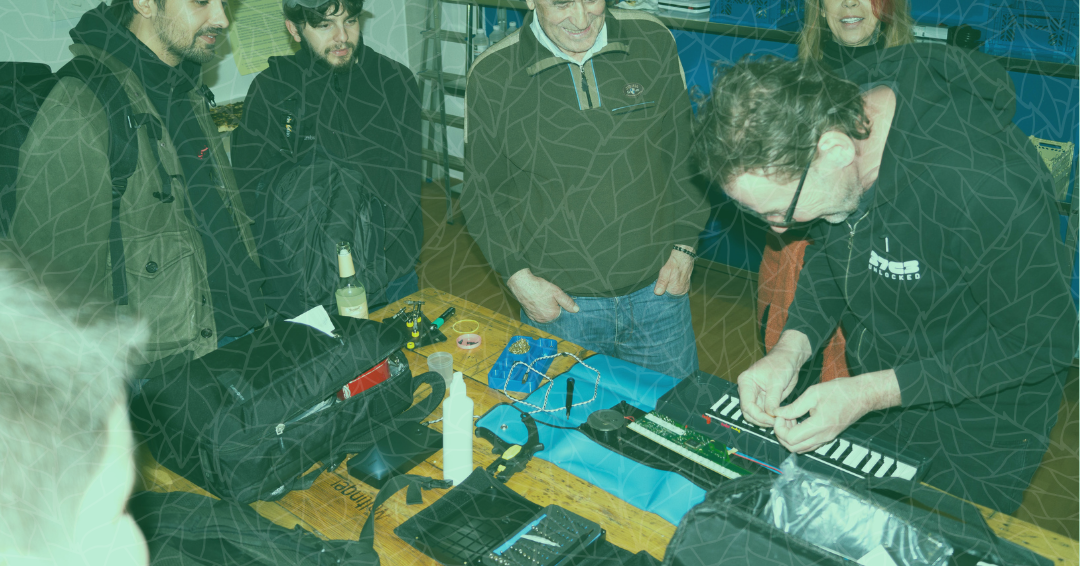
Kreisler, a space of community repair and share in Berlin that offers a hands-on response to the crises of overconsumption, social isolation, and infrastructural neglect.

The world crumbles around us. Wealth inequality is deepening while the human species is facing an existential crisis. Despite calls to accept neoliberalism as inevitable, our situation is not hopeless. However, placing hope in yet-to-materialize technology to address ecological crises and wealth inequality is audacious. Narratives like “green growth”, “ecomodernism”, and “accelerationism” ...
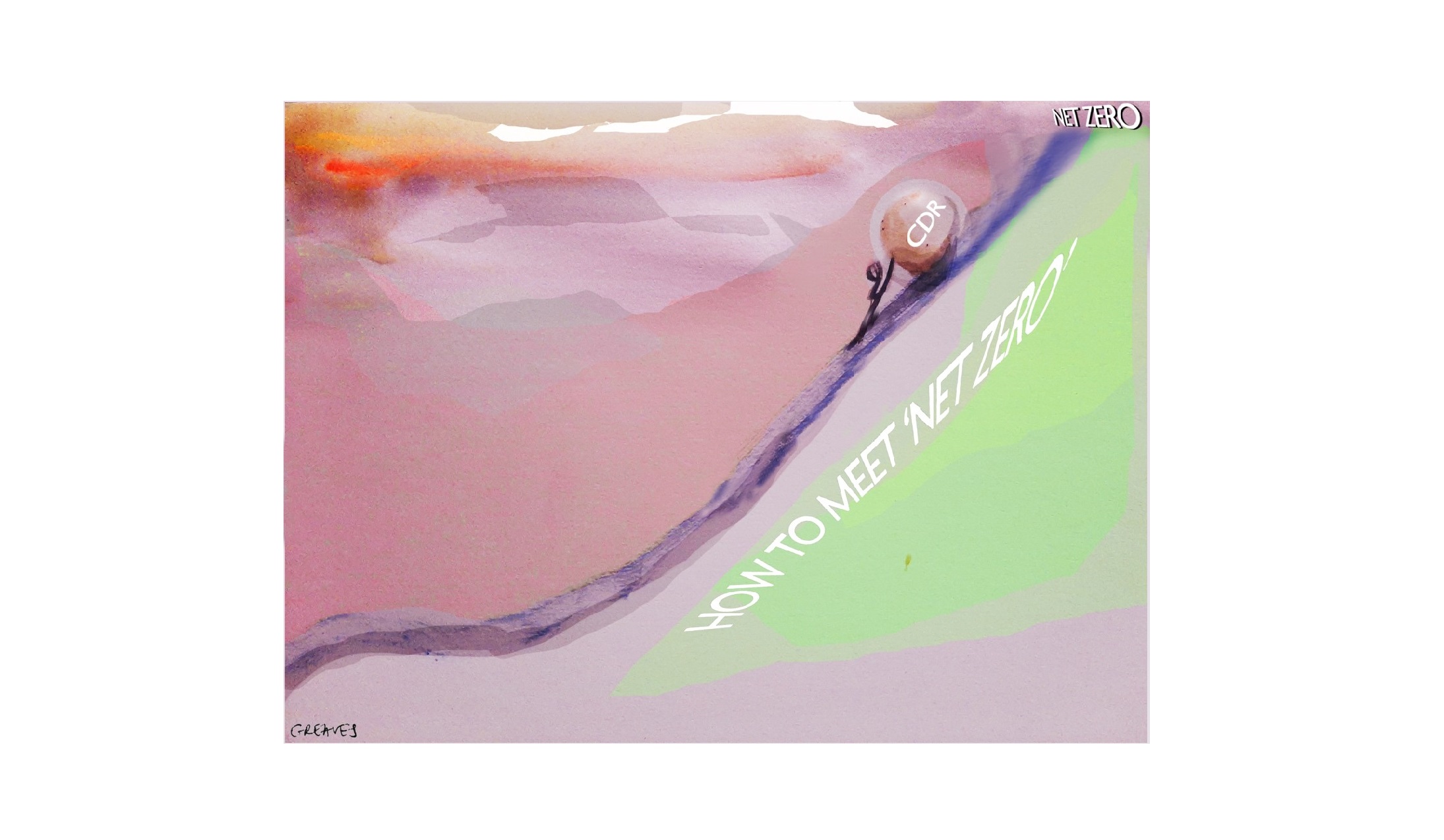
'The State of Carbon Dioxide Removal' report, published in January 2023, was presented as ‘a first-of-its kind, independent, scientific assessment.’ Rather than questioning the quite genuine commitment of scientists and researchers working to address climate change, the Myth of Sisyphus highlights a fundamental problem with the ontology of sustainability Science itself




#/media/File:Pieter_Bruegel_the_Elder_-_The_Tower_of_Babel_(Vienna)_-_Google_Art_Project_-_edited.jpg)