
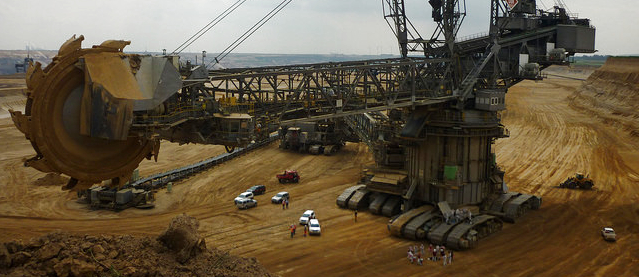
The call for courses for our Degrowth in Action - Climate Justice Summer School 2015 has now been extended to 7 May. The summer school will take place from 9 to 14 August 2015 in the lignite-mining region of the Rhineland in cooperation with the annual climate camp. The core of the summer school programme is made up of courses that take place continuously over 4 days. In addition, there is the possibility to offer two day long courses. Each day for 2,5 hours, the same group of people (about 20 - 30 people) focuses on specific topics in the field of alternative economic models or climate justice, or works on tangible approaches for putting degrowth into political practice. If you're interested in preparing a course, you can find all relevant details here. the updated PDF-version is available here

Thirty four years ago I published Abandon Affluence and Growth, with negligible effect, so it has been hugely satisfying to see the recent emergence of a degrowth movement. However, I believe some aspects of the movement need greater attention. Degrowth transition strategies especially should deal more effectively with the sheer magnitude of the problem we are facing. The magnitude of the prob...

Degrowth addresses the negative consequences of consumerism (psychological stress, long working hours and positional competition) and discusses the benefits of frugal lifestyles. Henri Lefebvre, a French philosopher from the 20th century, argues that if ideas or values are not physically implemented in space, they become mere fantasies. As such, if degrowth wishes to prevail, it has to leave it...
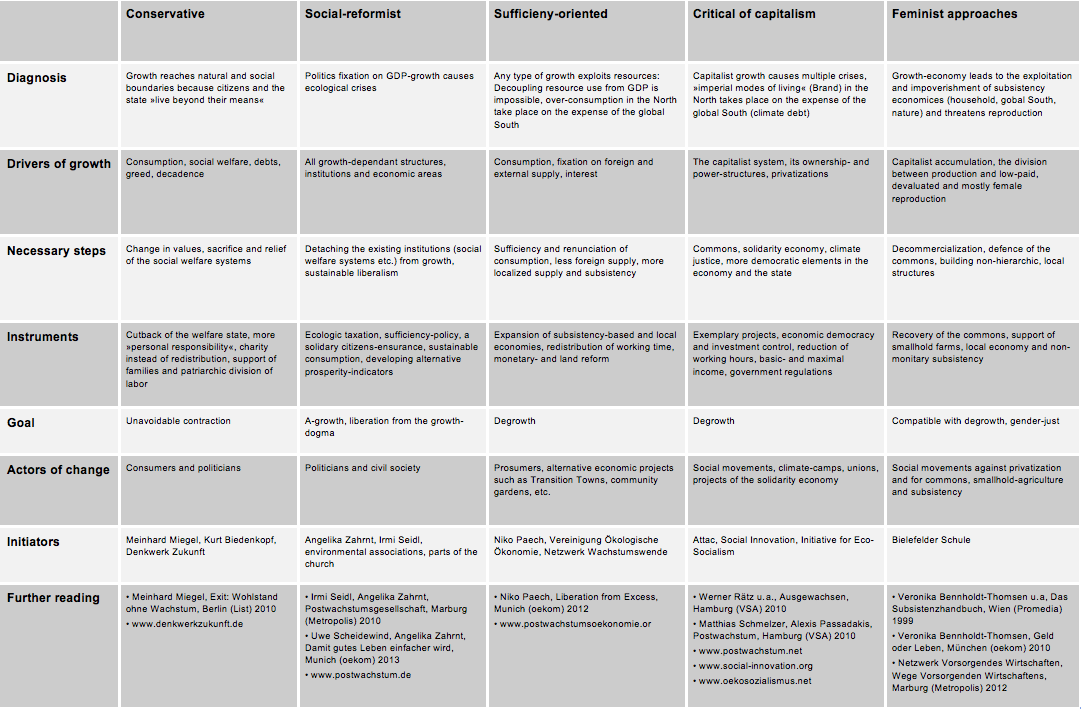
By Matthias Schmelzer The following article is a translation from the forthcoming “Atlas der Globalisierung”, that will be edited by Le Monde diplomatique and the Kolleg Postwachstumsgesellschaften (Universität Jena) under the title “Less is More. The Postgrowth-Atlas” (“Weniger wird mehr. Der Postwachstums-Atlas”. Postwachstum. Degrowth. Décroissance. These are buzzwords of a newly emergin...