
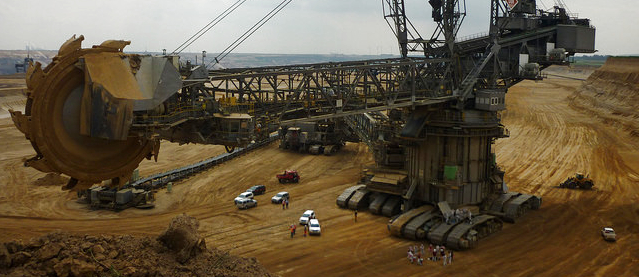
The call for courses for our Degrowth in Action - Climate Justice Summer School 2015 has now been extended to 7 May. The summer school will take place from 9 to 14 August 2015 in the lignite-mining region of the Rhineland in cooperation with the annual climate camp. The core of the summer school programme is made up of courses that take place continuously over 4 days. In addition, there is the possibility to offer two day long courses. Each day for 2,5 hours, the same group of people (about 20 - 30 people) focuses on specific topics in the field of alternative economic models or climate justice, or works on tangible approaches for putting degrowth into political practice. If you're interested in preparing a course, you can find all relevant details here. the updated PDF-version is available here

This year we celebrate the 10th anniversary of the first international degrowth conference in Paris, 18-19 April 2008. This event introduced the originally French activist slogan décroissance into the English-speaking world and international academia as degrowth. This year we celebrate with three conferences: the current one in Malmö, the one in Mexico City from 3 to 7 September and at the Post...
According to German columnist Georg Diez, the violation of democratic processes in the wake of the financial crisis in 2007/2008 was an epochal break comparable to the great depression and the developments thereafter. One reason for the increase in racism and rise of the radical right, he writes, is also the helplessness of the left faced with the increasing numbers of people who feel abandon...
What does degrowth mean to you? By Marc Menningmann In this video, some of the scientists, activists and ordinary other participants who gathered at last year's Degrowth Conference in Leipzig share their personal understanding of degrowth. It shows how many different facets degrowth can have. Now we have added English subtitles to it which can be activated by clicking on the little green b...