
The Journal of Cleaner Production will be issuing a special volume on the topic of technology and degrowth and is looking for interesting scientific contributions. Abstracts of 400 to 500 words can be submitted until 31 August 2015. The special volume aims to both provide 1) a state of the art selection of current discussions of the role of technology within Degrowth in academia and practice and 2) a deepened reflection on technologies with the aim to specify perspectives and to overcome their entrenchment. The full call for papers can be accessed here
.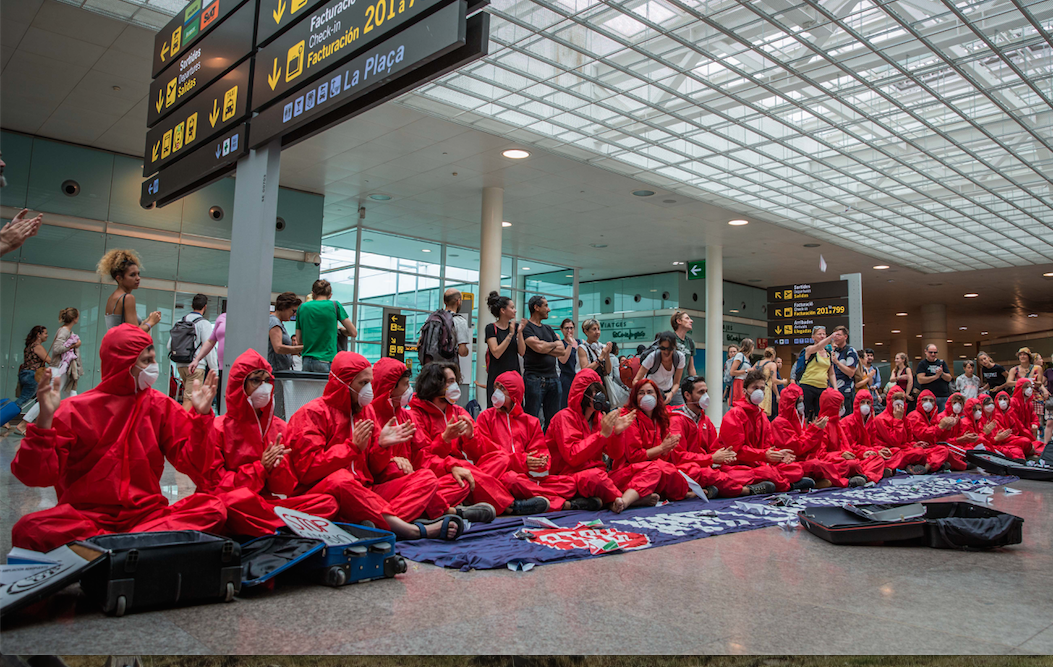
The aviation industry has avoided regulation, taxation and climate responsibility for years. Now they ask for public bail-outs. Here's why they shouldn't get it and how you can contribute. The problem of aviation Aviation is one of the fastest growing sources of greenhouse gas emissions. The sector is already responsible for 5-8% of global climate impact, but is still planning for a doubl...

Economic growth can’t reduce inequalities; it merely postpones confronting exploitation. The emergence of interest in degrowth can be traced back to the 1st International Degrowth Conference organized in Paris in 2008. At this conference, degrowth was defined as a “voluntary transition towards a just, participatory, and ecologically sustainable society,” so challenging the dogma of economic gr...
Eindrücke von der Degrowth Sommerschule und dem Klimacamp im Rheinland Zum zweiten Mal ist jetzt die Degrowth Sommerschule auf dem Klimacamp im Rheinland zuende gegangen mit ca. 800-900 Teilnehmenden auf dem Camp. Während es letztes Jahr vor allem um Klimagerechtigkeit ging und darum, die Degrowth- und Klimagerechtigkeitsbewegung zusammenzubringen, ist dieses Jahr daraus eine solide Partnersc...