
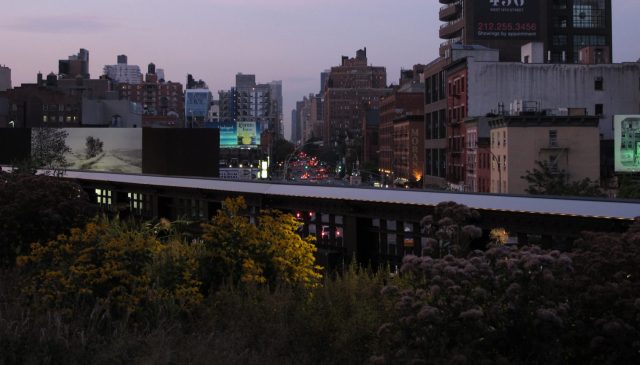
Auf den stillgelegten Hafenanlagen entlang des Ufers des East River in New York entsteht der Brooklyn Bridge Park. Über 2 Kilometer erstreckt sich die Grünanlage mit Sport- und Freizeitangeboten und bester Aussicht auf die Skyline von Manhattan. Etwas weiter südlich im Herzen Brooklyns liegt der Prospect Park, ein beliebtes Ausflugsziel für Familien. Auch hier hat sich in den letzten dreißig Jahren einiges getan. Eine groß angelegte Umgestaltung verhalf dem Park seinen gefährlichen Ruf abzulegen. Brooklyn ist grüner geworden – und teurer. Könnte es also sein, dass die Entwicklung einer grünen Infrastruktur die Gentrifizierung Brooklyns befeuert hat? Weiterlesen auf dem Blog Postwachstum
Degrowth aims at undoing growth. Undoing growth both at the level of social structures and social imaginaries. Although the focus is very often on the latter, i.e. the “decolonization of imaginaries” as put by Serge Latouche, the degrowth perspective still seems to lack a comprehensive understanding of the role of ideology, the path dependencies and the power that shape these imaginations. Degr...
By Chandran Nair A seminal paper jointly authored by a dozen international scientists and academics and released in April has created a ripple in the conservation community. It is a lengthy essay but what An Ecomodernist Manifesto says is that accelerated technological progress combined with socio-economic change will 'decouple' human economic pursuit from its impact on the environment. Transl...
In unserem Interview für den Stream towards Degrowth diese Woche sprachen wir mit Joachim Spangenberg, dem Co-Coordinator des EJOLT-Projektes für Umweltgerechtigkeit, das im April eine Karte der weltweiten Ressourcen- und Umweltkonflikte veröffentlichte. In einem Onlinekurs im Rahmen des Projektes trainieren Vertreter/innen von Umweltbewegungen den erfolgreichen Umgang mit Medien, Politikern und vor Gericht. In EJOLT arbeiten [...]