
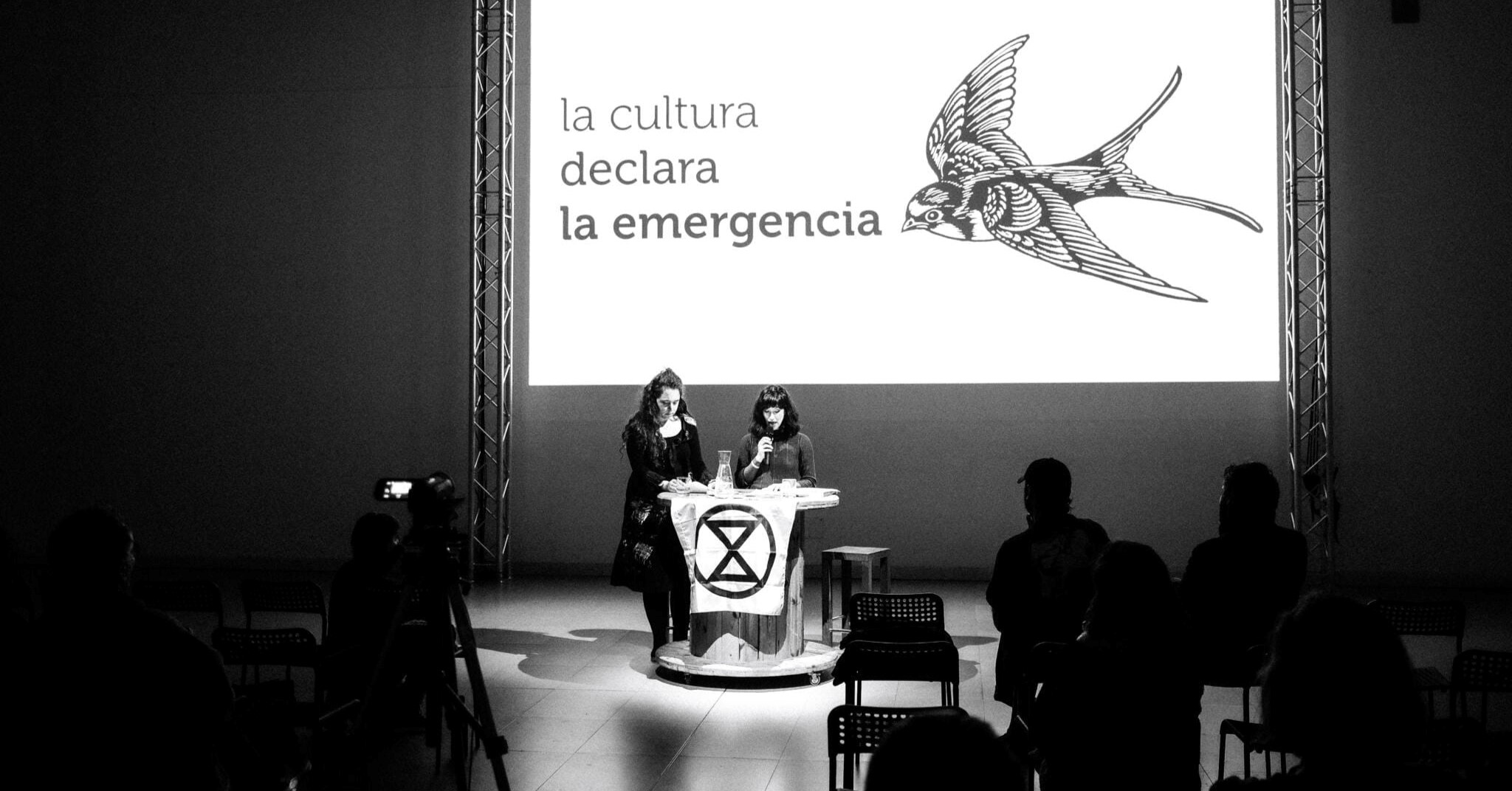
Image source: Culture Declares Emergency
Culture Declares Emergency (CDE) is an international movement that began in the UK in 2019, which brings together arts and culture professionals to confront today's ecological and social crises. Through cultural assemblies and a self-supportive network, members make public commitments ranging from cutting flights and installing solar roofs to creating with recycled materials or restoring biodiversity. In doing so, CDE shows how the cultural sector has a crucial role to play in both imagining and enacting sustainable futures.
A report by the UN Human Rights Office (May, 2020) underlined the need to recognise the nexus between climate, culture, and human rights, quoting a 2013 article in nature climate change:
The consequences of these emissions—climate change impacts—are given meaning through cultural interpretations of science and risk. Culture is no less central to understanding and implementing adaptation: the identification of risks, decisions about responses, and means of implementation are all mediated by culture.
Cultural practices, informed by values and vision, transform our environment and shape our lifestyles. Thus, culture in its broadest sense and ecosystems become inextricably linked. At least until the early 20th century, the use of land stayed within the biophysical limits of the planet (although in some cases agricultural practices were locally destructive). Civilisations exceeding limits were banished – well-known and sometimes controversial examples include the Mayan civilization and Angkor Wat. The expansion of the extractivist system puts ecosystems around the world (including human and non-human life) in jeopardy. Traditional, situated, knowledge may be one way to initiate regenerative systems.
At the same time, climate change is a threat to cultural heritage. As much of the world is under threat from extreme weather events, already risking millions of human and non-human lives, entire societies are at risk, diminishing our common pool of cultural diversity. Irreparable damage to material heritage entails the loss of knowledge and sense of identity, as recognised by IPCC reports. Possibly one of the earliest examples of cultural heritage eroded by pollution in Europe is the entrance to Santa Maria de Ripoll Monastery in North East Spain. In the early 1970s, an enclosure was installed to shield the piece from weather conditions and pollution. Yet, there is still little research on climate change mitigation and resilience relating to built cultural heritage.
On the one hand, aesthetics, narratives, and the media have reinforced consumerist values and the idea of never-ending progress rooted in endless economic growth. A notable example is fossil aesthetics, tied to new transportation means, heavy industries, and the World's Fair (from the late 18th century onwards), linked to the spreading of racism and cultural supremacy. Art-related jobs such as design or film-making, often promote lifestyles heavily dependent on fossil fuels, resource extraction, and disposable goods. Thus, culture and arts professionals have contributed to normalizing environmentally harmful behaviours that alienate people from ecological realities and the natural world.
On the other hand, frequent travel for exhibitions, residencies or live shows contribute greatly to global carbon emissions, infrastructure development that displaces populations, and unjust offsetting projects. Large-scale installations, scenery production, fast fashion production and many other activities typically involve the use of non-recyclable materials, synthetic paints, plastics and heavy metals, which are often toxic and environmentally persistent. Obtaining these materials also causes social and environmental damage due to exploitative mining practices or unsustainable forestry.
The transition towards a system compatible with life requires the incorporation of social and cultural perspectives to scientific speeches. Now the arts are becoming a source of inspiration for various processes, such as generating new narratives and utopias, making data meaningful to our intimate experience of life, as well as a tool to subvert advertising.
More and more professionals in the arts and culture sector (including public administrations) have started taking baby-steps to find their own way to adapt to the new conditions and, possibly, to help mitigate the worst scenarios of the climate crisis. Here's a list – not exhaustive – of the most common points in which CDE believes arts and culture can serve humanity in this global crisis:
Founded in the UK and now global, CDE is an initiative that is aiming to create a network of individuals and organisations in the arts and culture sector who want to take urgent action according to their capacities. The community is self-supportive, sharing knowledge and support.
CDE brings together a social movement by and for arts and culture professionals and environmental activists scattered around the globe by organising cultural assemblies (following the pattern of people's assemblies) and other activities such as networking breakfasts. By creating and sustaining a community of practitioners, we help professionals in arts and culture to realise the worth of their action in the current ecological and social crisis
Then, professionals in arts and culture can share their commitment to take action on the CDE website – this is known as a declaration. Declarers commit to ambitious and achievable action. Sometimes it means implementing something new, sometimes it is a description of something that is already happening: greener mobility options (no more flights, no personal car), solar roofs, veganic gardening, limiting the use of electricity by adapting shows to natural rhythms, using recycling materials in creative projects, investing in restoration and biodiversity projects or raising awareness, to name but a few examples.
By declaring, arts and culture professionals make their commitments visible and inspire others to follow. In this way, CDE not only networks practitioners but also nurtures a shared cultural response to the climate and social emergency.
Cultural activism is not merely about creating "climate art"; it is a strategic intervention into the very foundations of our sociopolitical order. It operates on the core premise that culture is the bedrock of society—it shapes our values, legitimizes power, and defines our collective imagination. Therefore, to confront a crisis rooted in extractive capitalism and social inequality, one must actively contest and transform this cultural bedrock. CDE excels at this by mobilizing the sector not just as content creators, but as a structural force. It targets the institutions—the museums, galleries, and production houses—and the individual professionals within them, demanding a reckoning with their own operational and ethical frameworks.
This is where CDE powerfully links the personal and the political. Each public "declaration"—whether to forego flights, install solar panels, or use recycled materials—is a personal commitment. But collectively, these acts become a political statement: they are a visible, growing refusal of the sector's complicity in business-as-usual. They transform private choices into a public, collective demand for systemic change, creating a new culture of accountability from the ground up. By building a self-supportive network that shares knowledge and solidarity, CDE moves beyond symbolic protest to construct a viable counter-culture within the arts world—one that prefigures the regenerative and just society it advocates for.
Thus, CDE stands as a prominent example of how cultural activism works: it begins with the personal declaration of emergency and culminates in the political project of rebuilding our cultural infrastructure, proving that the pathway to a new world is carved through the transformation of our daily practices and the institutions that house them.
As the ecological crisis accelerates, the role of culture becomes even more critical as an active agent for transformation. CDE reminds us that every artist, curator, educator and institution has the power to shape the stories we tell about ourselves and the world we inhabit. By declaring, we acknowledge both complicity and capacity.
The invitation is clear: to move beyond meaning-making and into solidarity. The arts are not merely an afterthought in times of crisis. They are the connective tissue that can rekindle imagination, nurture belonging and mobilise collective action. In reclaiming culture as a force for ecological regeneration and social justice. We do not just adapt to a changing world; we help shape it.
Join your regional hub!
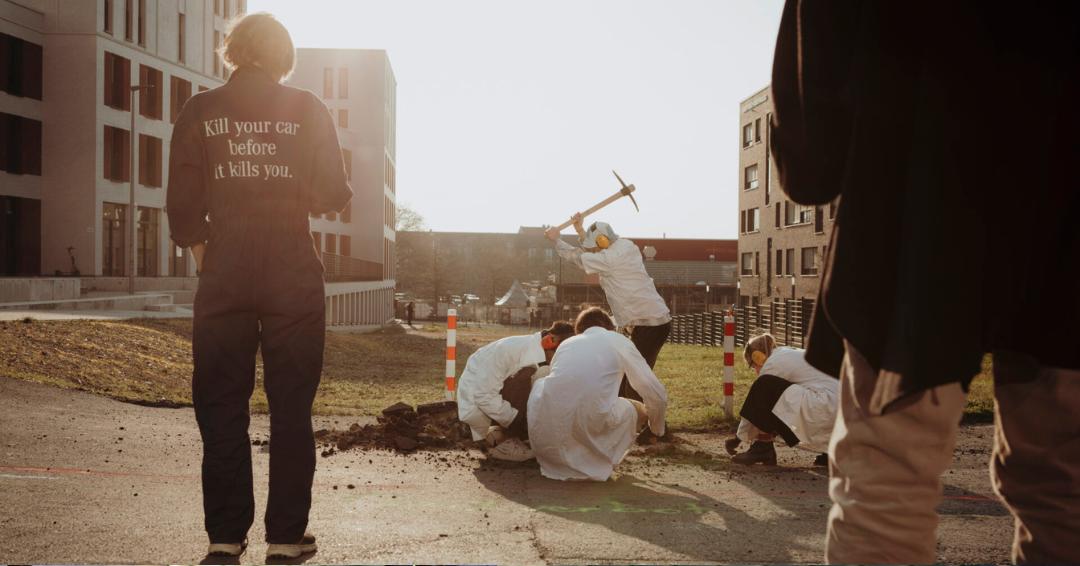
Participatory art can spark ideas that challenge growth-driven thinking and, in doing so, contribute to social and ecological urban development.

Only days away from Christmas, Hannah Morris deplores its co-optation into a capitalist fiesta.
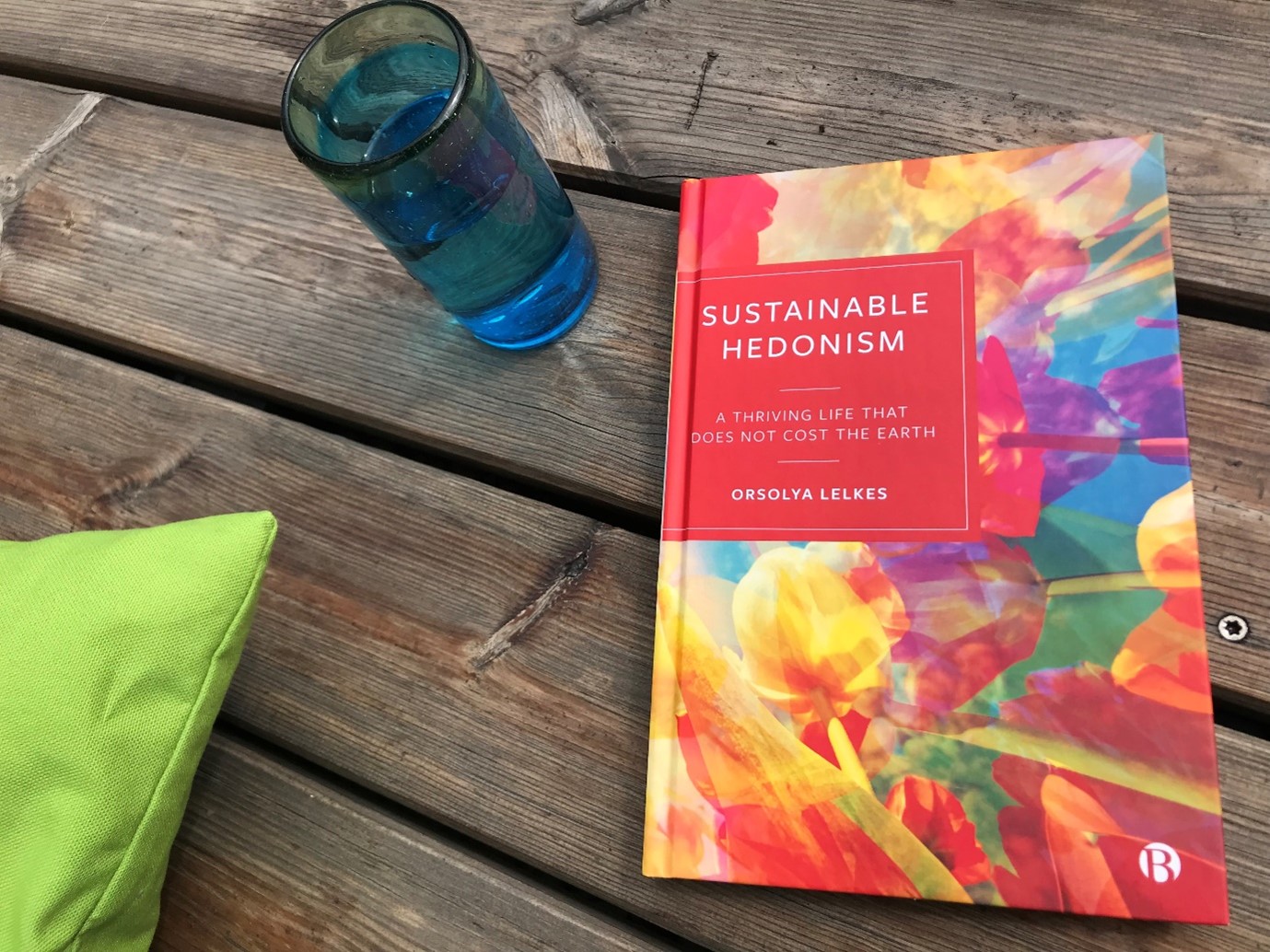
The notion of sustainable hedonism appears at first to be a provocation. Is it a paradox? Is it just more greenwashing nonsense? It is meant to puzzle, to perplex, and to propel. Sustainable Hedonism. A Thriving Life that Does Not Cost the Earth is a call to reflect on our beliefs and actions related to pleasure, joy and ecological sustainability.