

Manzoor Ahmad Dar in front of his unit in Turka-Tachloo, Anantnag. Credit: Seerat Bashir.
Kashmir is widely admired for its breathtaking landscapes, lush green valleys, flowing rivers, dense forests, and snow-capped mountains that attract visitors from across the world. Its natural beauty has long served as a representation of ecological richness and tranquillity. But this beauty comes with an increasing environmental hazard. The area's environment is steadily deteriorating, and its delicate ecosystem is at risk due to the growing amount of plastic debris that can be seen near water sources, on roadsides, in open fields, and surrounding residences.
Approximately 6.3 billion tons of the 8.3 billion tons of plastic manufactured worldwide have ended up as garbage. An estimated 53 million tons of plastic might contaminate lakes, rivers, and seas by 2050. Only 9% of plastic has ever been recycled, even though one million plastic bottles are bought globally every minute. 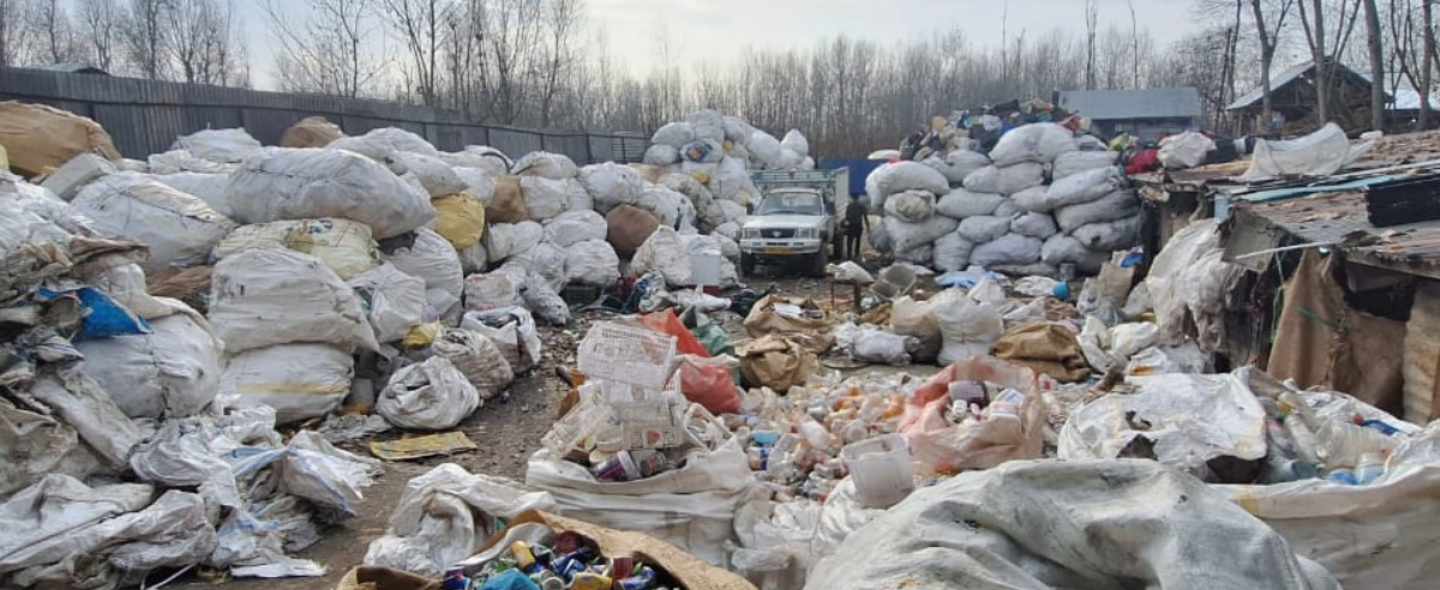
Over 51,000 tonnes of plastic garbage are produced in Jammu and Kashmir each year, with about 31,000 tonnes originating from the Kashmir Valley alone, according to official figures. 146 of the 254 registered plastic manufacturing and recycling facilities in the region are situated in Jammu.
In Kashmir, everyday consumer usage and inappropriate disposal produce the majority of plastic garbage. Widespread contamination is a result of inadequate waste management systems and an increasing reliance on single-use plastics, including bottles, bags, wrappers, and packaging. Fields, drains, woodlands, water bodies, and residential areas throughout the valley are common places to find plastic debris, according to Manzoor Dar. The plastic problem has significantly worsened due to the growing throw-away culture, inadequate collection methods, and a lack of trash segregation.
Food services, transportation, packaging, and tourism significantly contribute to the increase in plastic waste. Takeout containers, bottled water, packaged snacks, and disposable cutlery are often thrown out in public areas. Bottles and wrappers are strewn along highways and transportation corridors, and isolated communities now receive packaged items without the infrastructure to handle the resulting debris. Meanwhile, the designated dumping sites established by the government are not properly managed or maintained. In several cases, waste is openly dumped without adequate segregation, treatment, or monitoring, which leads to further environmental contamination. Some of these sites are located close to public areas, increasing health risks and making the problem more visible. In ecologically delicate locations like woods, rivers, and meadows, tourism exacerbates plastic waste during peak seasons. To retaliate against this waste, one local idea has surfaced in Kashmir. 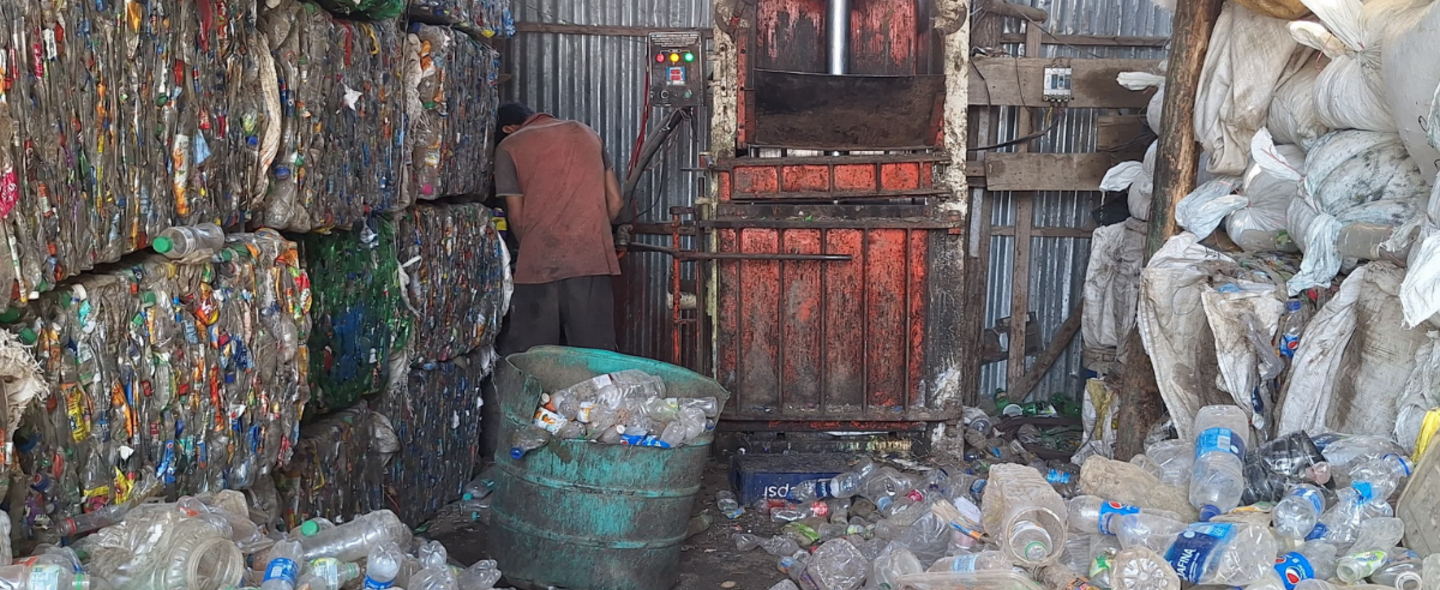
In 2011, Manzoor Ahmad Dar had the idea of turning plastic garbage into a profitable and sustainable enterprise. His path to entrepreneurship was unusual and difficult because he was born into a family that struggled financially and did not have a formal education. In Turka-Tachloo, Anantnag, he and his brother, Bashir Ah Dar, paid ₹10 lakh to buy two essential machines: a compressor to compress plastic bottles and a grinder to shred plastic of various colours into tiny pieces. They dubbed these devices the Dar brothers. The project was entirely self-funded.
According to Manzoor Dar, his journey started when he realised that plastic posed a serious threat to the environment and might be profitable if handled properly. Manzoor Dar travelled from village to village before starting his recycling business, buying used plastic from homes in return for cutlery and utensils. Because there were no organised waste management systems in place at the time, he saw plastic building up around homes, in open fields, along roadsides, and near water sources.
Bashir Ahmad Dar, Manzoor’s 65-year-old elder brother, played a key role in establishing the unit. He assisted in setting up the initial infrastructure, maintained the ledger and accounts, and provided continuous guidance and practical suggestions during the early stages of the business.
“Waste pickers and door-to-door collectors are the basis of our recycling strategy”, says Manzoor. Through collecting recyclables directly from homes, shops, streets, and public areas, they keep plastic out of fields, rivers, and landfills. In addition to recovering materials that would otherwise be lost to the environment, the collectors educate families about the need to separate plastic garbage in order to make it simpler for these waste pickers to gather what they require and disregard what may be thrown away without endangering the environment. Waste pickers are environmental heroes who should be respected and acknowledged for their efforts to keep the environment clean.
An individual worker never does this work alone. Manzoor states, "It is the effort of many people working together every day. The unit employs about thirty workers across two scrap facilities, providing stable income for many families." Sorting, machine handling, quality control, and safety are among the abilities that most workers have acquired through practical experience rather than formal instruction.
Ajaz Ahmad (30), one of the employees, explains their operating processes: “After the plastic reaches the processing plant, we filter it by category and colour, such as black, green, blue, red, and white, since proper separation is essential for maintaining recycling quality. Next, to make sure the plastic is ready for processing, a different crew takes care of cleaning and eliminating contaminants. The grinding workers operate the grinding machines, where plastic of the same colour and type is crushed into small granules. This is a sensitive stage that requires experience and attention. The compressing team handles bottles, oil cans, and containers. Using compressors, they reduce the volume so the material can be transported efficiently. Following processing, employees bundle, weigh, label, and pack the material. Lastly, the packages are shipped to recycling companies outside of Kashmir by the dispatch and transport crew”.
Abdul Rasheed (50), another employee, emphasises that a recycling facility cannot be effectively managed by machines alone. Numerous processes, particularly sorting, cleaning, quality control, and machine operation, rely on human judgment and experience. To avoid quality damage, we evaluate the type, texture, contamination levels, and machine performance of the plastic. He says, "Machines help with strength and speed, but human skill, attention, and responsibility protect quality and safety."
A major portion of the profits is put back into the business to buy raw plastic garbage, maintain and update equipment, and oversee operating and transportation procedures. Reinvestment is essential for sustainability and continuous expansion because these businesses rely heavily on ongoing input and operating machinery. Simultaneously, the earnings directly support livelihoods.
In 2019, Manzoor took one more audacious step forward in his business. Following the success of his recycling initiative in the village, Turka-Tachloo, he set out to spread his influence. In the Vessu region, about 12 kilometres from his house, he opened a second plastic production facility using his years of knowledge and wisdom. 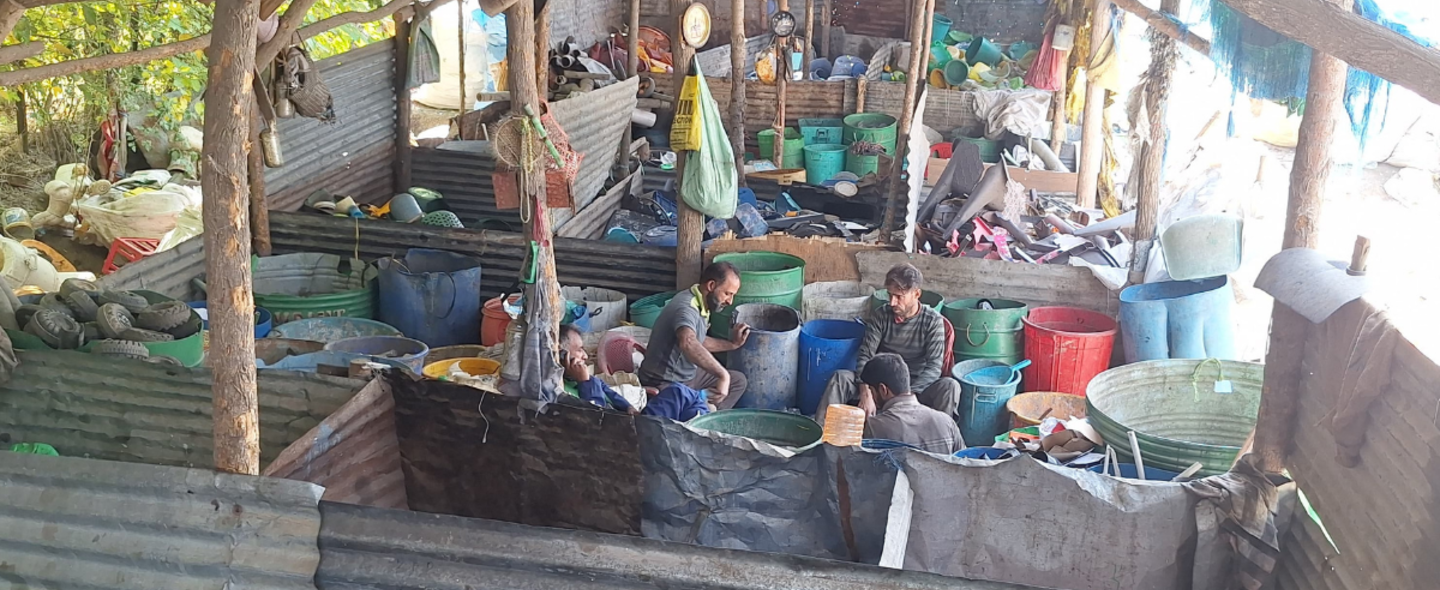
Waste pickers and recyclers continue to deal with hazardous working conditions, health concerns, unstable income, and societal stigma despite their vital function. Manzoor thinks that although they contribute to maintaining clean neighbourhoods and safeguarding natural ecosystems, their labour is still underappreciated.
Manzoor is adamant that big businesses must be held accountable for the plastic garbage that their products produce. Businesses that profit from plastic packaging must accept accountability for the waste produced by their goods and make investments in infrastructure for recycling, waste collection, and assistance for local recyclers.
The government must enforce laws and create strong policies, such as implementing programmes that pay customers for returning plastic bottles and containers, setting up facilities for recycling, collection, and sorting, launching public awareness campaigns in schools, enforcing guidelines requiring the separation of biodegradable and non-biodegradable waste in homes, and enhancing local and village waste infrastructure.
This will require sustained public pressure and lobbying to push for stronger regulations, transparency, and responsible production practices. Without public action, local communities, recyclers, and garbage pickers are unfairly burdened. As ordinary people, we are attempting to reduce the harm caused by plastic by recycling.
Manzoor admits that recycling is not a perfect answer, even though it helps lessen immediate environmental harm. With every recycling cycle, plastic deteriorates until it can no longer be recycled. He believes that recycling is only a short-term fix and that strengthening waste infrastructure, increasing regulations, and lowering plastic production are the long-term solutions.
However, Bashir emphasised that improving trash management is a long-term solution since it removes recycling limitations and creates a stable system to handle waste at every level by enhancing transportation systems, establishing appropriate recycling and sorting facilities, guaranteeing trash segregation at the source, and developing organised collection methods. Strong infrastructure guarantees that garbage is constantly managed and kept out of the environment, even though recycling can only go so far. Other long-term solutions, like cutting back on plastic production and successfully implementing restrictions, are also essential.
While they might not be able to end the world's plastic problem, small recycling facilities not only create jobs but also keep plastic out of rivers, forests, and landfills. Dar Brothers remains committed to its objective despite obstacles such as unstable supplies, the work requiring hard physical labour, low profits, weather hazards, and a lack of institutional support.
Manzoor's son, Junaid Ahmad, stated that the Dars’ plastic business is part of a broader global movement shifting the perception and handling of plastic waste. Globally, plastic is no longer considered waste but instead a useful raw material in the growing circular economy. As an economical and ecologically friendly substitute for the manufacturing of new plastic, industries are depending more and more on recycled plastic. Small-scale initiatives like Dar's, which convert garbage into useful resources, connect local initiatives in Kashmir to worldwide environmental and economic trends.
Waste pickers and recyclers are the real environmentalists, and their efforts should be respected, safeguarded, and supported. Protecting Kashmir's fragile natural environment is everyone's responsibility, and long-term progress won't be possible without strong governmental policy and corporate backing in addition to grassroots activities. The Dar Brothers emphasised that they intended to assist in creating a more sustainable, healthy, and clean future for Kashmir in addition to improving the handling of plastic waste.
This post is part of a mini series on which The Himalaya Collective collaborates with degrowth.info. Together, we aim to forge connections between individuals and groups striving to achieve alternative economic and social systems both locally and globally, and to highlight real-life practices inspirational to the degrowth movement. You may read this post on the Himalaya Collective’s website, in English, or in Hindi. You may also read the other pieces of the series here:

This essay concentrates on the disputed topic of work time reduction in degrowth literature, exploring arguments both for a decrease and increase of work.

As the current default indicator for economic and social ‘progress’, GDP is the most broadly established measure of a country’s economic performance relative to that of other countries. Conceived as a tool to measure economic quantity, GDP is widely used to assess economic quality, although it ignores a range of vital economic activities, most notably care work. On top of that, the race for GD...