
"Es gibt nicht „die“ Grundeinkommensbewegung, wie es auch nicht „das“ Grundeinkommenskonzept gibt. Es gibt auch nicht „die“ Degrowth-Bewegung wie es auch nicht „das“ Degrowth-Konzept gibt. Aber es gibt in beiden Bewegungen übereinstimmende bzw. ähnliche Ansätze, die fruchtbar für ein gemeinsames politisches Engagement gemacht werden können." Artikel aus dem Degrowth-Blog auf degrowth.de, erschienen im Februar 2016

If you've ever dreamt of the good life for all based on everybody's individual skills and needs, free from domination and in mutual appreciation and cooperation, you've got the chance now to help make this dream come true: from 21 to 25 June around 1000 people will be getting together in Mecklenburg-Vorpommern, North-East Germany, to "design the future, de-grow growth and live utopia" in a ...
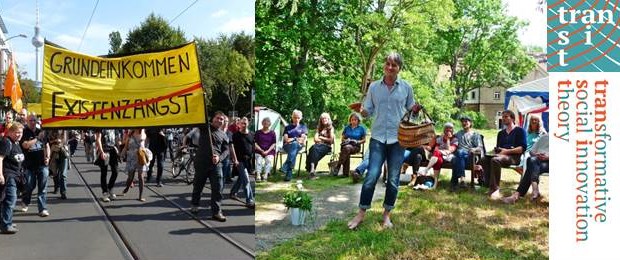
A Study on Transformative Social Innovation There are numerous grassroots movements and initiatives worldwide with the ambition to contribute to transformative change towards more sustainable, resilient and just societies. Many of them have a specific vision on the economy and relate to alternative visions of a ‘New Economy’. The research project TRANSIT highlights four prominent strands of ne...
For our project “Degrowth from a future perspective”, we would like to present how Erik Assadourian, Senior Fellow at the World Watch Institute, envisions a Degrowth America in 2100 and looks back to the transiton towards a truly sustainable United States. Will this have become a place where we can still have personal (electric) vehicles, [...]