
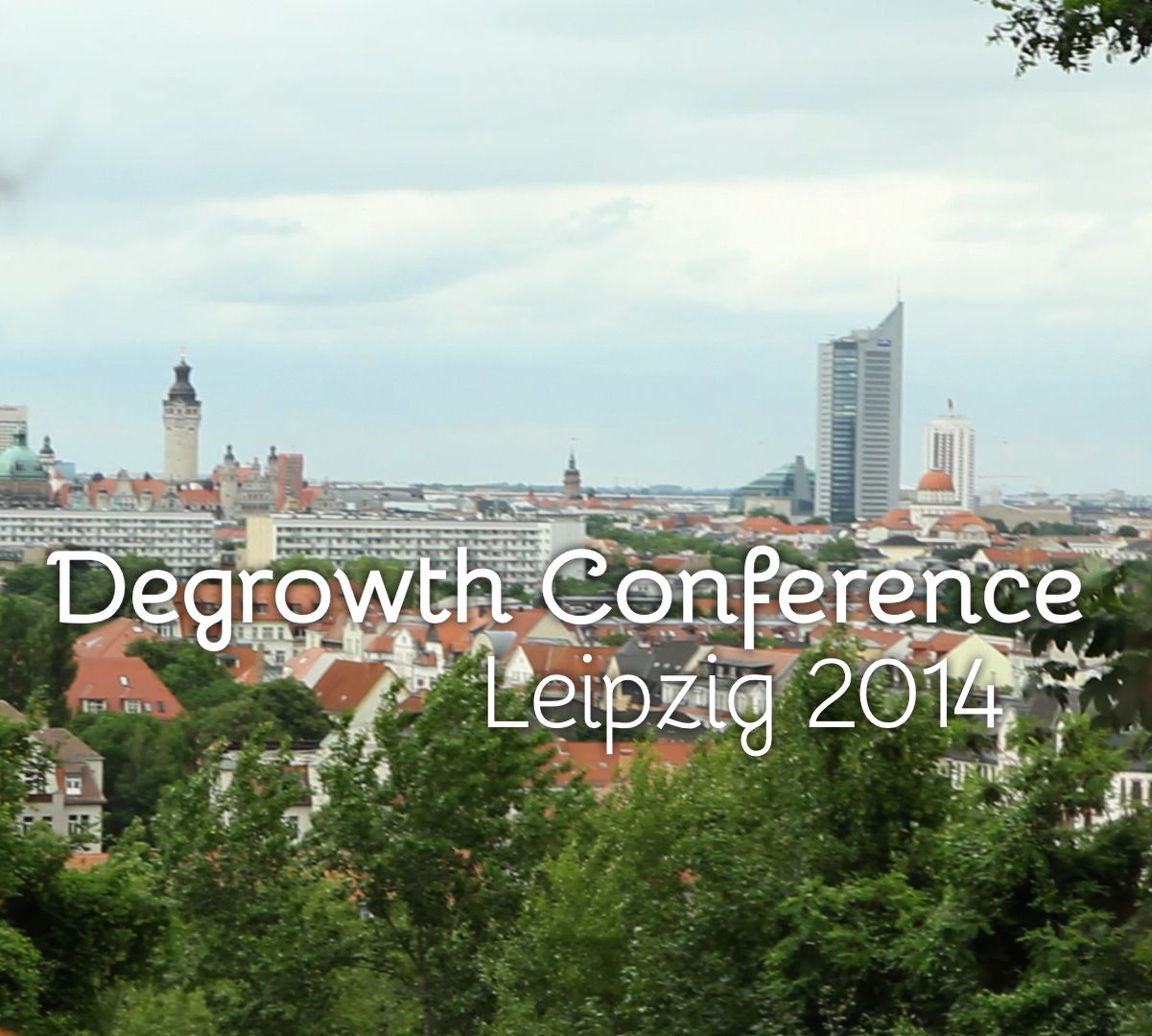
In order to make our conference a truly democratic and inclusive event, we have started an exciting crowdfunding-campaign. It will run for 55 days and ends shortly before the conference.
Our goal is to enable as many people as possible to participate in the conference and to contribute to a change towards a society beyond the imperative of economic growth. In order to achieve this, however, we have to offer quality child care at the conference, video-streaming of the main events on our website and solidary funding of travel expenses. For these three purposes we will need 15.000 Euros to be raised through the crowdfunding campaign.
As a thank you for the support there will be interesting presents such as hand-signed books written by members of our advisory board, canvas bags with degrowth-logo and an invitation to a degrowth-lunch in Leipzig.
Please support us, not necessarily with financial contributions, but also through sharing this crowdfunding campaign via your own networks. We hope that you will enjoy our little film. If you have questions or suggestions, please contact us at crowdfunding@degrowth.de

We are starting 2020 full of enthusiasm for all that is to come! If you want to be involved in the degrowth movement you just need to roll up your sleeves because in this new year, there will be plenty to do. Here is a list of the activities that planned for 2020 so you can already mark them in your calendar. Crowdfunding During the first months of the year, we will be going through the fi...

What is capitalism? A kind of state? An institution? Some values? A power structure? Ideology? A Culture? What governs capitalism? Supply and demand Invisible hand Enclosure of land The drive to expand Market mechanism Class schism Racism The moral virtue of productivism. Innovation! Invest! Impress! Progress! Entrepreneurial quest for Technological success in Pursuit ...
By Ashish Kothari As it becomes abundantly clear that humanity as a whole has crossed the ecological limits of the earth, and that countries like China and India are fast joining the already-industrialised nations in stressing the planet even more, the search for radical alternatives is humanity’s most urgent quest. There is no doubt that, as [...]