
In order to make our conference a truly democratic and inclusive event, we have started an exciting crowdfunding-campaign. It will run for 55 days and ends shortly before the conference.
Our goal is to enable as many people as possible to participate in the conference and to contribute to a change towards a society beyond the imperative of economic growth. In order to achieve this, however, we have to offer quality child care at the conference, video-streaming of the main events on our website and solidary funding of travel expenses. For these three purposes we will need 15.000 Euros to be raised through the crowdfunding campaign.
As a thank you for the support there will be interesting presents such as hand-signed books written by members of our advisory board, canvas bags with degrowth-logo and an invitation to a degrowth-lunch in Leipzig.
Please support us, not necessarily with financial contributions, but also through sharing this crowdfunding campaign via your own networks. We hope that you will enjoy our little film. If you have questions or suggestions, please contact us at crowdfunding@degrowth.de

This blog post analyzes press coverage of degrowth in Western European (English language) newspapers and magazines between January 2015 and October 2020. Using media theory concepts such as agenda setting and framing, it explores how degrowth is being considered in the press, particularly as a potential response to climate change.

Growth-critical authors and advocates of a post-growth society are often criticized on the grounds that some of their arguments appear open to appropriation by authoritarian nationalist and nativist racist forces. As such objections are often made in a polemical and overly generalised manner, often ultimately aiming to delegitimize growth-critical ideas as a whole, those being criticised often ...
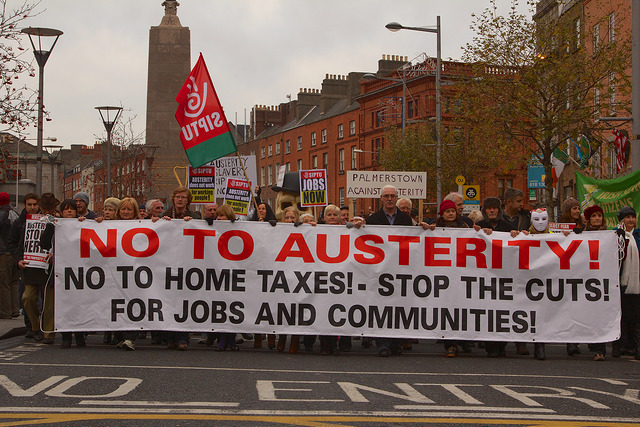
How the conflation with neoliberalism and austerity unfairly reduces the idea of degrowth to absurdity – and where the degrowth movement can turn for answers to the crisis. The degrowth movement has been developed in response to neoliberal reality, neoliberalism's comically reductive view of human nature, its ecological blindness and the rise in social inequality it has brought about. Austerit...