
In order to make our conference a truly democratic and inclusive event, we have started an exciting crowdfunding-campaign. It will run for 55 days and ends shortly before the conference.
Our goal is to enable as many people as possible to participate in the conference and to contribute to a change towards a society beyond the imperative of economic growth. In order to achieve this, however, we have to offer quality child care at the conference, video-streaming of the main events on our website and solidary funding of travel expenses. For these three purposes we will need 15.000 Euros to be raised through the crowdfunding campaign.
As a thank you for the support there will be interesting presents such as hand-signed books written by members of our advisory board, canvas bags with degrowth-logo and an invitation to a degrowth-lunch in Leipzig.
Please support us, not necessarily with financial contributions, but also through sharing this crowdfunding campaign via your own networks. We hope that you will enjoy our little film. If you have questions or suggestions, please contact us at crowdfunding@degrowth.de
My colleagues and I wrote an initial blog post arguing that the question of strategy has received too little attention in the degrowth movement, and by degrowth scholars. Further, we observed that the discourse on strategy in degrowth was excessively plural, being open to all strategies in all contexts, rather than considering case-appropriateness (spatially, temporally, sectorally etc.). Th...
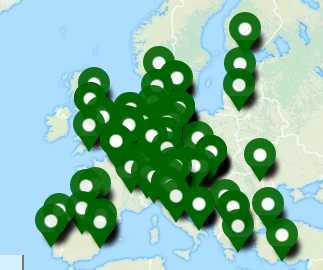
In the past year, we have launched a survey worldwide for mapping degrowth realities in the world. 114 organisations answered to the call, with nearly 3,000 active people engaged, mostly located in Europe but also in North and South America, Philippines, Tunisia, Turkey, etc. On August 20th 2018, some members from each of them met for the first time in Freetown Christiania (Copenhagen, Denm...
Shortly before the start of the Climate Camp and the Degrowth Summer School, we are changing the venue of our camp. We have found an even better place in close proximity to the open cast mine Garzweiler. Further information is available here