

After almost a year of tireless work we are proud to present our degrowth library. Here you can find various materials related to the transition to an economy independent from economic growth. The library already contains almost 700 entries, from introductory videos to newspaper articles and scientific publications in different languages. Diverse search options and an extensive list of themes make it easy to filter the existing material.
With the library, the team of the degrowth web portal hopes to make existing media easily accessible and to support the degrowth movement which is currently gaining momentum. The library will remain up to date as more materials are continuously added. We wish you much fun exploring the library!

In the 1980s, cities were defined as the ‘growth machines’ of the economy (Molotch, 1976). Today, urban economists epitomize them as economic ‘triumphs’ (Glaeser, 2011). Cities, intended as dense and mixed forms of urban living organized in agglomerations of economic activities, are presented as the solution to many of contemporary socio-ecological problems. They are viewed as the location of t...
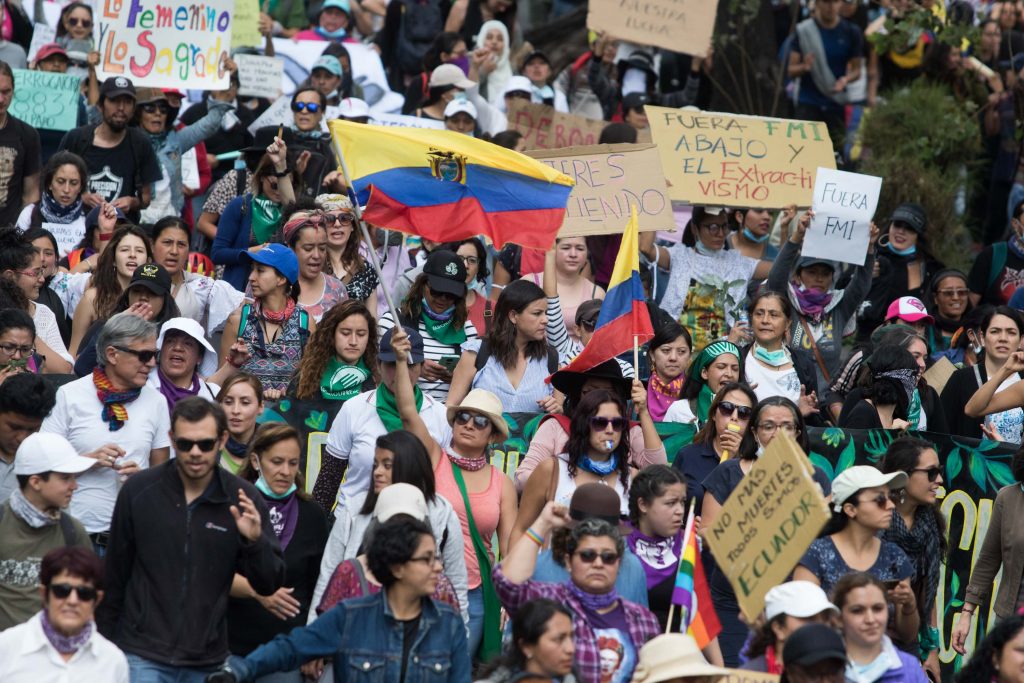
On October 1st, Ecuadorian President Lenin Moreno announced a series of economic measures for the country, including the elimination of gasoline and diesel subsidies and the liberalization of their prices, as part of an agreement with the International Monetary Fund (IMF). These measures led to the eruption of massive nationwide protests for eleven consecutive days, which were met by the govern...
The Stream towards Degrowth has begun to flow! Political, scientific and artistic institutions and initiatives as well as individuals are all part of the current of a growth-sceptic public. We started the stream on the 27th of November in Jena, Germany. Now we're looking forward to gathering reports, debates and points of views - in order to show the problems of the fixation on growth and to pr...