

After almost a year of tireless work we are proud to present our degrowth library. Here you can find various materials related to the transition to an economy independent from economic growth. The library already contains almost 700 entries, from introductory videos to newspaper articles and scientific publications in different languages. Diverse search options and an extensive list of themes make it easy to filter the existing material.
With the library, the team of the degrowth web portal hopes to make existing media easily accessible and to support the degrowth movement which is currently gaining momentum. The library will remain up to date as more materials are continuously added. We wish you much fun exploring the library!

My colleagues and I wrote an initial blog post arguing that the question of strategy has received too little attention in the degrowth movement, and by degrowth scholars. Further, we observed that the discourse on strategy in degrowth was excessively plural, being open to all strategies in all contexts, rather than considering case-appropriateness (spatially, temporally, sectorally etc.). Th...
The degrowth-conference took place in Leipzig in September 2014. Fortunately, the collected voluntary participation fee was higher than expected. This enables the conference team to allocate 9.000 Euro for project funding. Be it the promotion of discussions, the generation of knowledge, the education of people or a practical activity: The money should go to support small projects and courage...
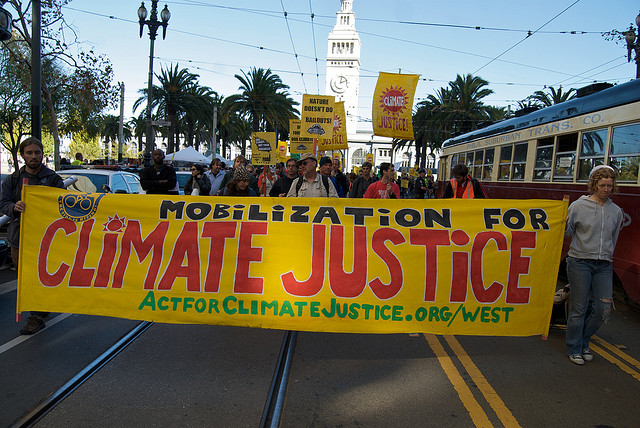
By Christiane Kliemann Shortly before the most crucial UN climate change conference after the failure of Copenhagen, it seems that the international climate-movement is finally getting its act together: resistance against fossil fuel extraction is gaining ground and a rising global movement is putting pressure on institutions to divest their money from fossil fuels to finance renewables instea...