
Welche Auswirkungen hat die Beschäftigung mit Degrowth für verschiedene Bewegungen, die beim Projekt "Degrowth in Bewegungen" dabei waren? Darüber sprechen Olaf Bernau (afrique europe interact), Friederike Habermann (Ecommony, MOVE Utopia), Theresa Klostermeyer (Deutscher Naturschutzring) und Werner Rätz (Attac), moderiert von Nina Treu (Konzeptwerk Neue Ökonomie) bei einer Podiumsdiskussion in Leipzig, zum Nachhören hier:
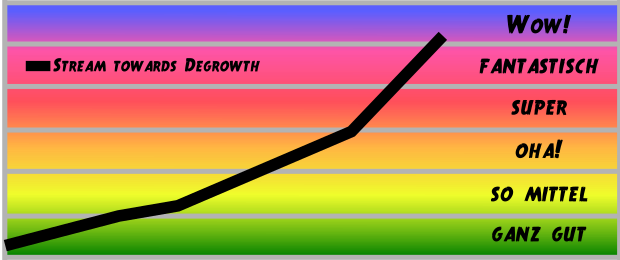
In unserer letzten Telefonkonferenz des Web-Teams wurde ich gebeten, ein Zwischenfazit für den „Stream towards Degrowth 2016“ zu schreiben. Ein undankbarer Job, denn – so interessant und unterschiedlich die Veranstaltungen des Streams im Einzelnen sind – so uninteressant sind Zwischenfazits, die wohl- oder übel auf eher abstrakter Ebene arbeiten. Mein Kollege Christopher meinte ich solle einfac...

Die Initiative LebensLernOrte ist ein von der Sinn-Stiftung initiiertes und mit Partnern getragenes Netzwerk. Ihr Ziel ist es, Menschen mit Erfahrungsräumen ‘gelebter Zukunft’ in Verbindung zu bringen und Lernprozesse zu begleiten. Jonathan Klodt arbeitet als Koordinator des Netzwerks LebensLernOrte. Auch mit ihm haben wir ein Interview geführt, das fiktiv im Jahre 2030, in einer Zeit [...]
Überall auf der Welt fahren die Leute gerne Mercedes. Auch andere Produkte „Made in Germany“ sind beliebt. Das herrschende Argument: Gute Qualität überzeugt eben. Deshalb exportiere Deutschland viel mehr als andere Länder. Im Jahr 2013 soll der deutsche Leistungsbilanzüberschuss (Exporte minus Importe) bei ca. 200 Milliarden Euro liegen. Dabei ist das nichts Neues: Deutschland erwirtschaftet seit [...]