

ASA is an educational programme that supports young and dedicated people to expand their skills and to contribute to sustainable global development based on respect for human rights and cultural differences since more than 50 years
Currently, the programm is looking out for suitable projects for the 2015 ASA-cycle with particular focus on the areas of degrowth and/or urban gardening which has been chosen as "topic of the year 2015" by last year´s participants. Applications can be submitted until 15 September in English, French, Spanish or Portuguese language.
In the context of these projects, ASA offers a scholarship and a one-year qualifying programme. After attending two training-workshops in Europe, participants start their internship with organizations in Africa, Asia, Latin America, the Near East and South-East Europe. During their internship, they carry out a three-month-project developed by the partner organization. The objective of the projects is to enable the participants to better understand global interdependencies and development-policy issues - and at the same time to support the partner organizations through qualified contribution.
Further details on the ASA-Programme and the requirements for projects and partner organizations are available here
For further questions, please contact Kristin Czyborra (kristin.czyborra@engagement-global.de, phone: 030/25482-353) oder Miriam Müller (miriam.mueller@engagement-global.de)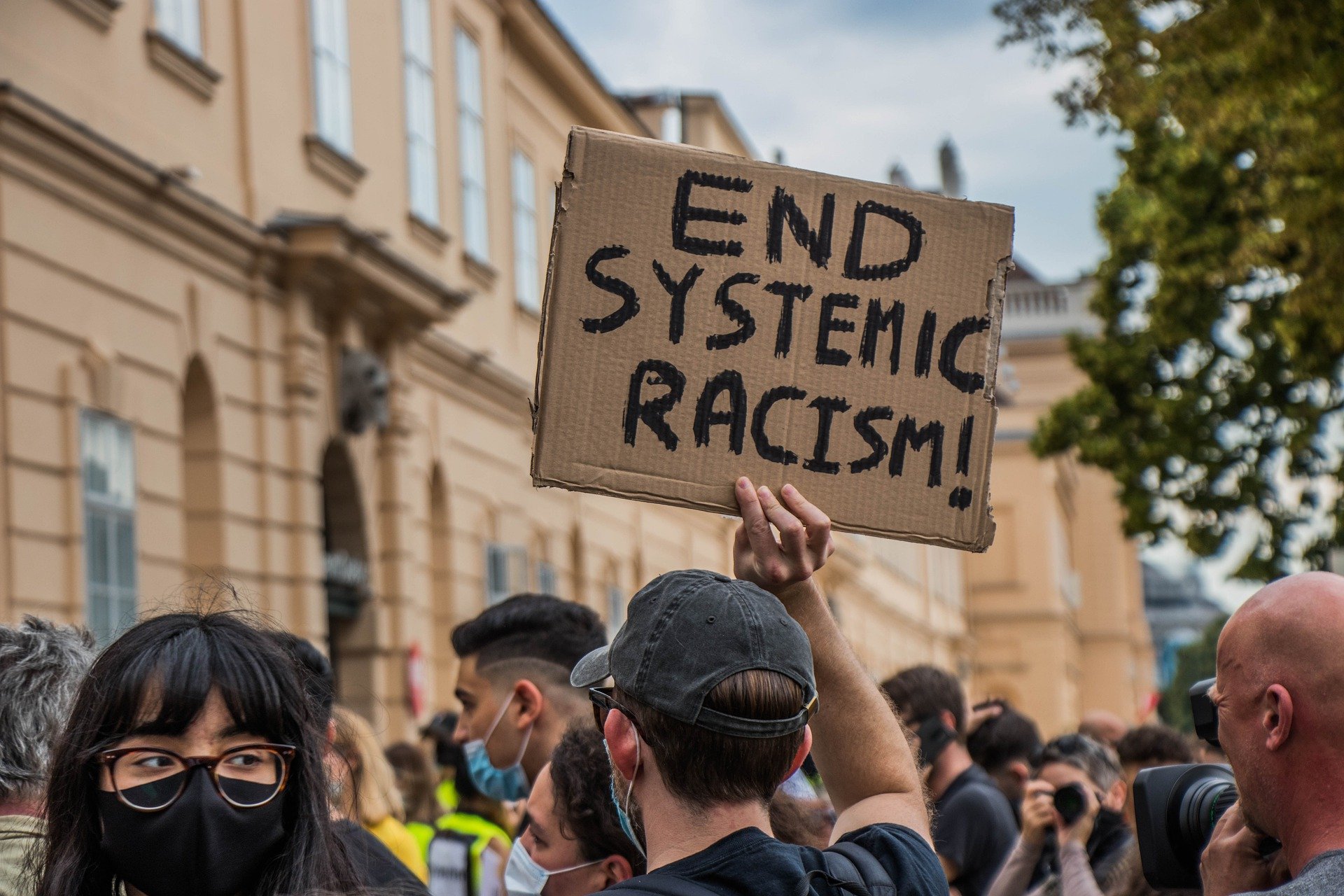
We, organizers and participants at the Degrowth Vienna 2020 conference demand equity and justice. We stand in solidarity with the people in the United States challenging white supremacist culture and with related global struggles. As activists, academics, artists, and practitioners we aim together to put an end to systemic oppression and structural racism; as again has been recently revealed by...
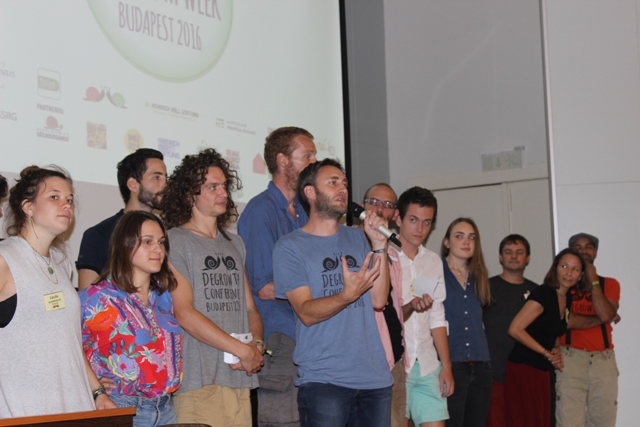
The fifth international Degrowth Conference is over, the call to host the sixth has been opened. A lot could be said about the conference, yet I do not intend to give a comprehensive overview, nor examine how it stands in relation with the former conferences. Instead, I want to share five aspects of the conference, which I found particularly insightful. 1. A Degrowth Conference in Hungary? ...

Europe is exhausted. It is exhausted after long years of what is labeled as the Eurozone crisis. It is exhausted after years of economic success and – now – prolonged years of political failure. Every single attempt of deepening the political union of Europe after the enactment of the Maastricht Treaty in 1993 and the [...]