
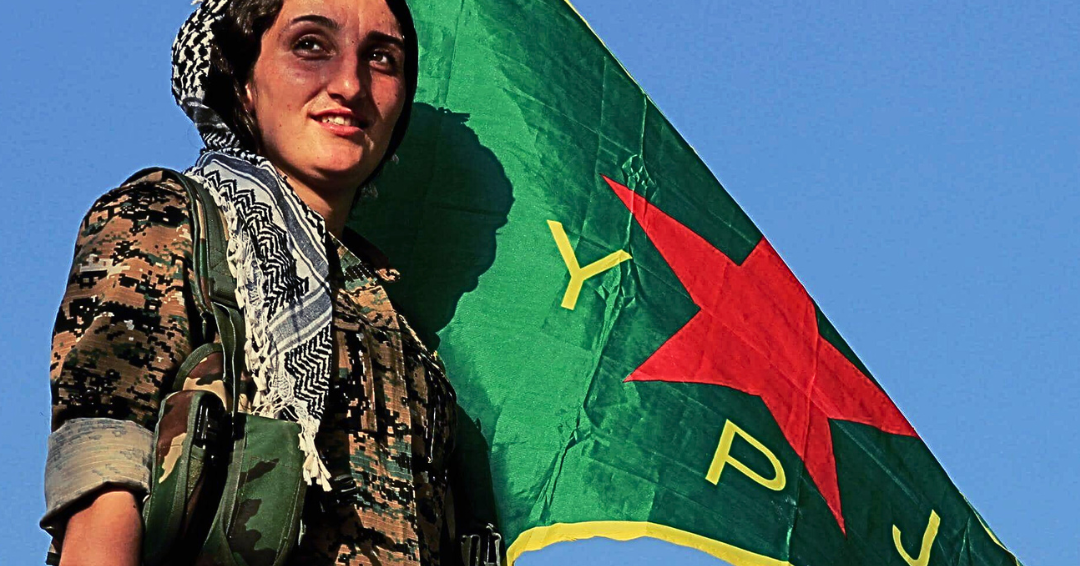
Credit: Kurdish Struggle
The Rojava Revolution is best understood through its slogan: "jin, jiyan, azadi" (woman, life, freedom in Kurdish). But the women’s revolution in North and East Syria didn't start in 2022, when the slogan became widely known through the women's protests following the death of Mahsa Amini. It started much before when the Kurdistan Workers' Party (PKK) arrived in Syria in 1979 and enabled women's active political participation for the first time. With the incentive of PKK leader Abdullah Öcalan, they created numerous women's-only organisations for political autonomy.
After Öcalan's imprisonment in 1999, women's organising went underground until 2011, when the Women's Free Star Union (later renamed Kongra Star in 2016) emerged to build women's councils, political education networks, and "women's houses" (mal a jin), spaces offering support for those facing domestic violence, forced marriage, and lack of access to education. In 2013, the Women's Protection Units (YPJ) — the armed guerrillas — was officially formed, playing a decisive role in liberation of Kobane in January 2015 and the eventual territorial defeat of ISIS in 2019, containing the spread of Daesh's brutality — militias that, supported by the Turkish government, kidnapped, killed, and raped hundreds of thousands of women in the region, especially Yazidis.
Abdullah Öcalan's theoretical framework connects directly with ecofeminist materialist perspectives, particularly Maria Mies' analysis of women as the first producers of life and creators of the first economy. Öcalan traces patriarchal domination through three "sexual ruptures": the initial appropriation of women's (re)productive labour in the Neolithic; the development of monotheistic religions establishing the patriarchal family as the "small state"; and the transition to capitalism marked by "housewifisation"— what he calls the "Great Housewifisation" that left the entire female population "unemployed" despite performing all domestic labour.
Democratic Confederalism — the political framework of the Rojava Revolution — is not only a women’s liberation project but also a direct challenge to capitalist modernity and its never-ending growth paradigm. Based on women’s liberation, radical democracy and ecology, it organises society through local assemblies, with equal numbers of men and women, rejecting the centralised nation-state and its colonial logic. The Democratic Autonomous Administration of North-East Syria (DAANES) system directly contradicts both the capitalist mindset of eternal accumulation and the logic of Islamic statehood where women and ethnic minorities have no freedom. Even amid prolonged warfare and embargo, DAANES held its first Ecological Conference in April 2024. For degrowth movements worldwide, Rojava is not an abstract inspiration: it is a “how to” reference and should be considered as such in any strategy debate.
Since January 6, 2026, this revolution has been under systematic assault. To understand the situation, the key actors must be named clearly.
The Democratic Autonomous Administration of North-East Syria (DAANES) is the self-governing territory — the political structure of the Rojava revolution. Its military wing is the Syrian Democratic Forces (SDF), a multi-ethnic force that has been one of the most important partners of the American-led Global Coalition Against Daesh.
The Syrian National Army (SNA) — a collection of Turkish-backed armed factions, Arab tribal militias, and ISIS fighters — launched a violent offensive against DAANES with support from Turkish military intelligence. The SNA operates under the political cover of the new Syrian government led by Hay'at Tahrir al-Sham (HTS), which emerged from al-Nusra Front, the Syrian branch of al-Qaeda, and is now led by "ex"-jihadist Ahmed Hussein al-Sharaa (also known as Abu Mohammad al-Julani).
The attacks have conquered around 40,000 km² previously under DAANES administration, displacing more than 150,000 people. The brutality spread rapidly, specially against women fighters: a woman SDF fighter was thrown from a building; another had her ears cut off; cemeteries for those who died fighting ISIS were vandalised; a video of a jihadist holding a woman fighter's severed braid went viral and so on. While major mobilisations erupted worldwide, most of the Western press remained silent.
The prospects for women under HTS were made clear in Raqqa. When Syrian Arab Army militias took over the city on January 20, Zenobia — an Arab women's organization built after the SDF liberated Raqqa from ISIS in 2017 — was forced to shut down, its centers looted and destroyed. Emel, one of its coordinators, fled under fire, warning the international community: excluding women means returning to the same logic of violence ISIS imposed on those streets less than a decade ago.
The violence against women and the dismantling of revolutionary institutions were not the only consequences of the territorial conquests. One of the first consequences of the territorial conquests was the unofficial release of hundreds of ISIS prisoners — despite attempts by HTS to blame the SDF, video documentation shows escapes happened after al-Julani's forces took control of the prisons, most notably in the al-Hol camp. Seizing the opportunity, ISIS has been signalling that it is organised and ready to re-emerge with full force in the region — a prospect made more likely by the imminent full US military withdrawal from Syria, which will also hand Turkey greater leverage over its allied factions within the country.
Currently, Kobane — the heart of the Rojava Revolution, liberated from ISIS eleven years ago on January 26, 2015 — is still facing a severe humanitarian crisis after weeks of total siege: no water, no electricity, no food, no medicines. A ceasefire agreement was signed between both sides on January 29 — and has so far lasted longer than the previous two. The deal was accepted by the SDF to prevent a Kurdish massacre and stipulates the integration of all autonomous institutions into Syrian state structures.
However, the agreement is very fragile: Damascus has not guaranteed the legal and political gains made by women under the autonomous administration, and its HTS-led government's stance on women's rights poses a direct threat to the advances achieved during the Revolution. Other provisions — Arabic being imposed as the official language of the education system, leaving Kurdish as a two-hour elective class — suggest the agreement may be no more than the postponement of an inevitable future confrontation, since some of the Revolution's core gains are non-negotiable.
The current escalation represents a new phase in what Öcalan termed the "Third World War" — the global realignment of hegemonic forces since the Soviet Union's collapse. Since 2020, the US and Israel have been working through the Abraham Accords to establish Israel as the hegemonic centre of a new Middle East security architecture — integrating Sunni Arab states under Israeli leadership while encircling Iran. Since October 7, 2023, this regional tension has accelerated: the Palestinian genocide weakened Iranian influence through Hamas and Hezbollah, while the fall of Syria's Baath regime on December 8, 2024, broke another pillar of Iran's regional hegemony.
The fall of Assad and HTS takeover installed a pro-Western government in Damascus that accepts capitalist modernity's rules, de facto recognises Israeli hegemony, and remains silent on Israeli occupation of southern Syria. HTS, despite documented human rights violations and war crimes, received international congratulations; the UN, US, and UK removed its terrorist designation.
The Paris meeting on January 5–6, 2026, where Syria and Israel agreed on a joint communication mechanism under US supervision, formalised a coordinated alliance against DAANES involving the US, France, Britain, Turkey, and the EU. EU Commission President Ursula von der Leyen pledged 620 million euros to the transitional government on January 9 — primarily to stabilise Syria enough to enable mass deportations from Germany — while war raged against Kurdish settlements. Turkish Foreign Minister Hakan Fidan made the strategy explicit: "The SDF will only change its position if confronted with force".
The US tactical alliance with the Kurdish-led SDF over twelve years was driven by the fight against ISIS — but also by efforts to contain the revolution's socialist orientation and use it as leverage against the Assad-Russia-Iran bloc. Now, with a pro-Western regime in Damascus, these tactical interests have fundamentally shifted. The attacks target not only Kurdish political and military structures but also the concept of the democratic nation itself. HTS leader al-Sharaa has openly stated his objectives: oil, gas, agriculture, water, and energy resources of northern and eastern Syria for the arab brotherhood.
Apart from Öcalan and the Kurdish-led movement, there is probably no other revolutionary-democratic force in the Middle East capable of resisting the imperial plans of Israel and the US. This international plan — backed by Israel, Turkey, the US, and European states — targets not only Kurdish achievements but the very idea of a democratic Middle East, seeking to demonstrate to the world that alternatives beyond the nation-state are impossible.
Caught between competing imperial interests, the Kurds and their Yazidi, Assyria, Syriac and Arab allies in the Democratic Confederalism project face not only Western imperialism, but also a long-standing regional project — sustained by both Turkish and Arab states — aimed at the annihilation of their culture, traditions, language and religion.
The Democratic Autonomous Administration and Kurdistan Freedom Movement have called for a total resistance modelled on the 2014–2015 Kobane resistance, emphasising that genuine legitimacy emerges through mass solidarity and people's diplomacy rather than state negotiations — because every state abandons its principles when interests change.
Standing with Rojava is standing for a concrete liberation project. The international left has historically failed Rojava — but there is still time to fully support this radical democratic project. Start by learning about the Rojava Revolution: how it was made possible by decades of political work on the ground, and how it embodies a complexity of reality that goes far beyond ideological purism. Then take that knowledge into the solidarity actions happening all over the world.
*In early 2025, I anticipated at degrowth.info that DAANES would possibly face major threats after Assad's fall — that worst-case scenario is now unfolding. Read the previous analysis and why Rojava should matter to degrowth here.
** Heyva Sor a Kurdistanê e.V, the Kurdish Red Crescent, is the only humanitarian organisation in the region. Donations can be made here.
By weakening the Corporate Sustainability Due Diligence Directive, EU policies reinforce extractive relationships and sacrifice zones.
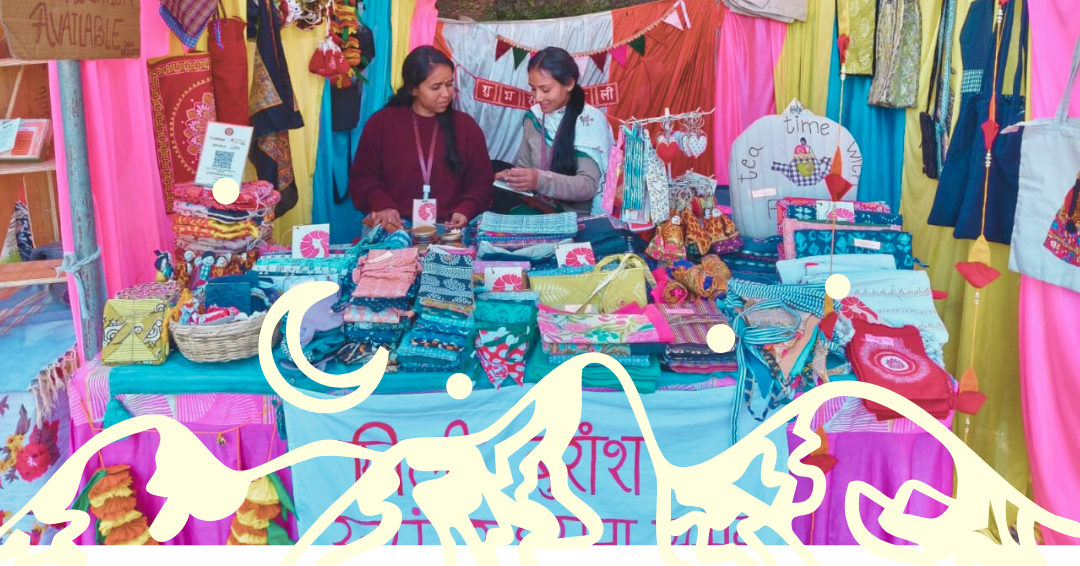
In this article, Shruthi documents the work of an empowering self-help group, Khili Buransh, in a remote Himalayan village in Uttarakhand, India. Shruthi explains how Khili Buransh leads a silent revolution against the prevailing capitalist-intensive, extractive, patriarchal, and casteist system.
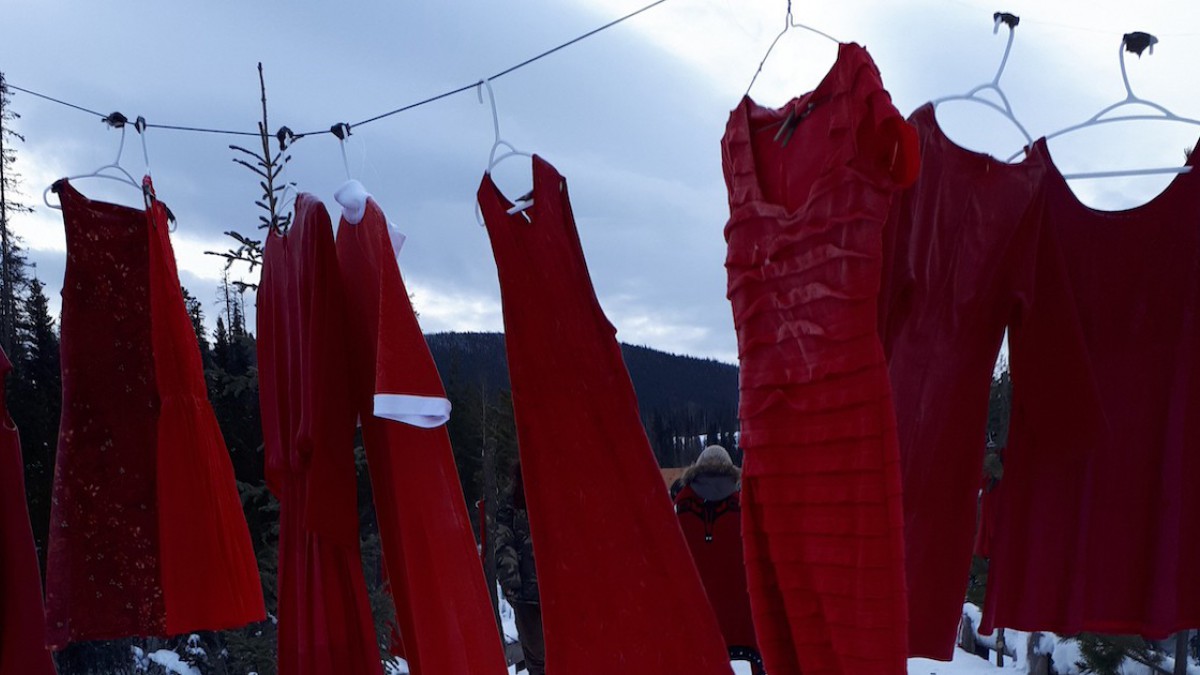
In the midst of the COVID-19 crisis, violence against women is increasing. More women are isolated at home with abusive partners and without resources and opportunities to leave. In Canada, where only a few months ago funding for Ontario rape crisis centres was slashed by $1 million, the political pressure to intervene in gendered violence has increased. Many women’s organizations, such as the ...