
Welche Auswirkungen hat die Beschäftigung mit Degrowth für verschiedene Bewegungen, die beim Projekt "Degrowth in Bewegungen" dabei waren? Darüber sprechen Olaf Bernau (afrique europe interact), Friederike Habermann (Ecommony, MOVE Utopia), Theresa Klostermeyer (Deutscher Naturschutzring) und Werner Rätz (Attac), moderiert von Nina Treu (Konzeptwerk Neue Ökonomie) bei einer Podiumsdiskussion in Leipzig, zum Nachhören hier:

Economic growth can’t reduce inequalities; it merely postpones confronting exploitation. The emergence of interest in degrowth can be traced back to the 1st International Degrowth Conference organized in Paris in 2008. At this conference, degrowth was defined as a “voluntary transition towards a just, participatory, and ecologically sustainable society,” so challenging the dogma of economic gr...
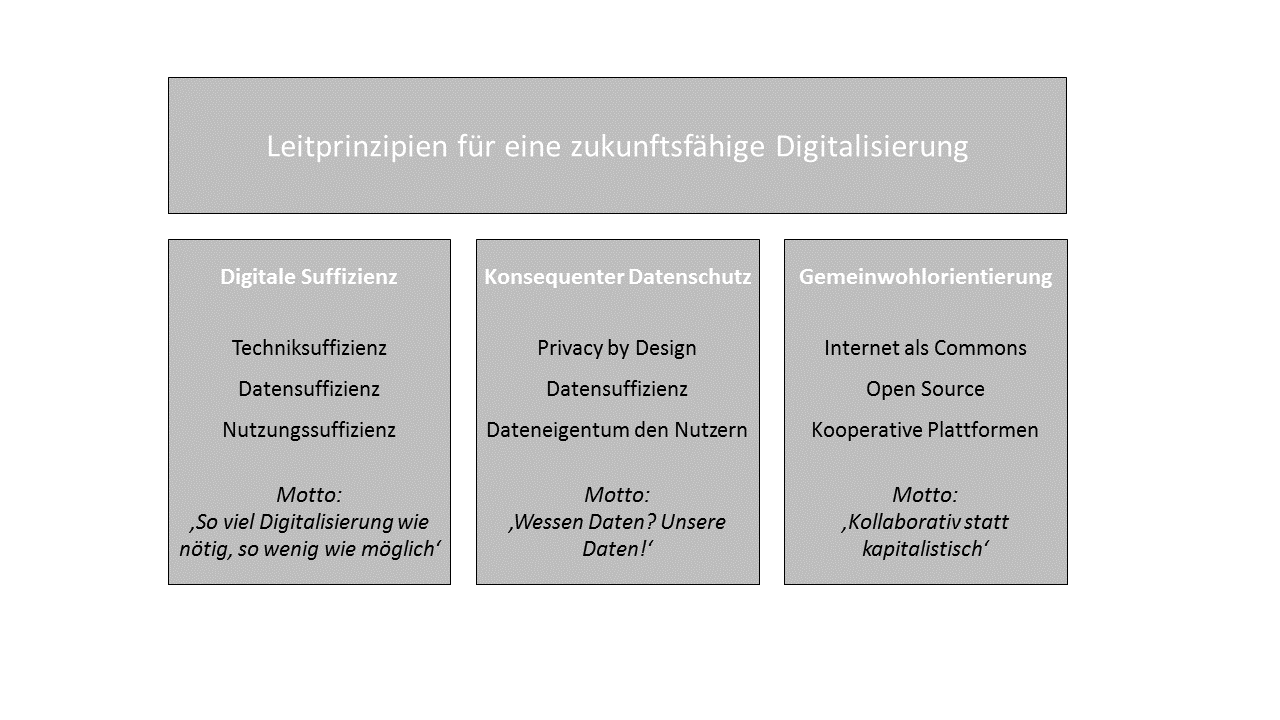
Buchrezension "Smarte Grüne Welt?" Technologien sind schöne Projektionsflächen. Wie die gute (oder böse) Fee im Märchen verkörpern sie häufig, je nach Sichtweise, entweder die Hoffnung auf eine fast magische Lösung unserer Probleme, oder die Bestätigung unserer Ängste. Eine vorurteilsfreie umfassende Auseinandersetzung mit den gesamtgesellschaftlichen Chancen und Risiken neuer Technologien f...
Sollte am 25. Mai beim Volksentscheid die Mehrheit der Berliner gegen Neubau auf dem Tempelhofer Feld stimmen, dann wäre das ein Sieg für das Postwachstum. Der Begriff wird bezüglich des Bauens beim Wort genommen, denn das bisherige Wachstum zeigt sich bei unablässig neu wachsenden Bürotürmen, Shopping-Centern und Wohnsiedlungen. Es liegt wohl auch am weit verbreiteten [...]