

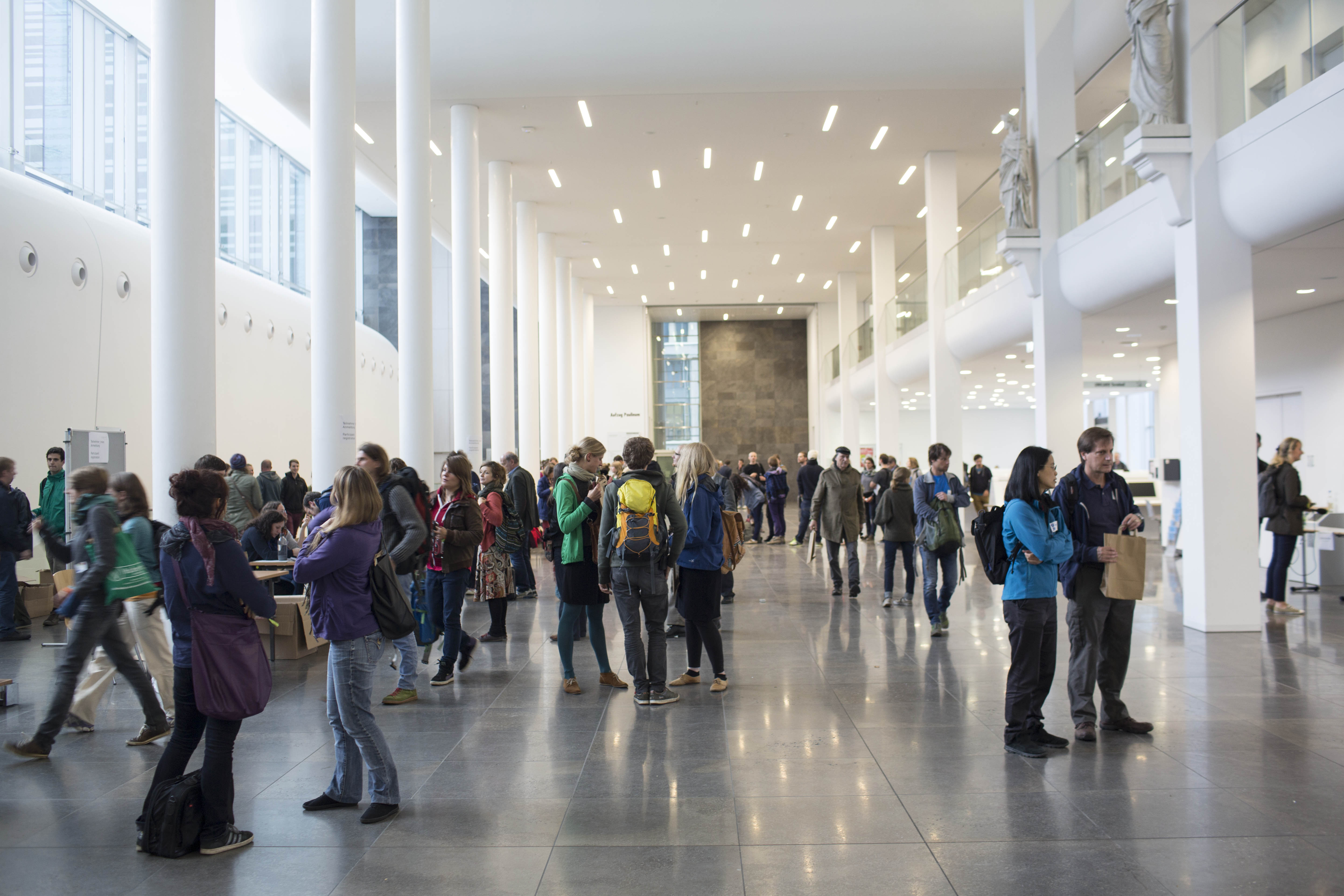
The Fourth International Degrowth Conference for Ecological Sustainability and Social Equity took place in Leipzig, Germany from September 2nd to 6th 2014. Almost 3000 people took part in the conference. The conference consisted of more than 500 events. You could find keynote speeches, panel discussions, scientific talks, discussion workshops as well as practical workshops and artistic formats. The conference showed the interest that exists for degrowth in Germany and made it possible to tie closer connections between the German and the southern European degrowth debate. Furthermore, links between the degrowth movement and other movements were strengthened, such as the climate justice movement. If you wish to read more about what was discussed at the conference you can stroll through the programme database and the press-review or watch a video of one of the events.
Moreover, you can read the following background information: > What made the conference special? > The host town of Leipzig
In a recent article for Forbes, Corbin K Barthold makes several allegations against the idea of degrowth without having a clear understanding of the concept. He also includes some quotations - originally reported in a different article (by Aaron Timms) - from a vibrant classroom discussion which took place at the 2019 Degrowth Summer School hosted by the Institute of Environmental Scienc...
The Support Group of the International Conferences on Degrowth for Ecological Sustainability and Social Equity met in Villarceaux, outside Paris, at the end of January. It was decided that the 7th International Degrowth Conference will take place in Manchester at the beginning of September 2020. The Manchester local organising committee sent a very strong application titled "Building Alt...
By Christiane Kliemann When listening to all the keynotes, panels and sessions, or simply joining the lively discussions between conference participants, there is the notion of an overall agreement that a broader new vision for society and the economy is most urgently needed. However, the elephant in the room is that such vision is almost impossible to shape, if it is to represent the diversi...