
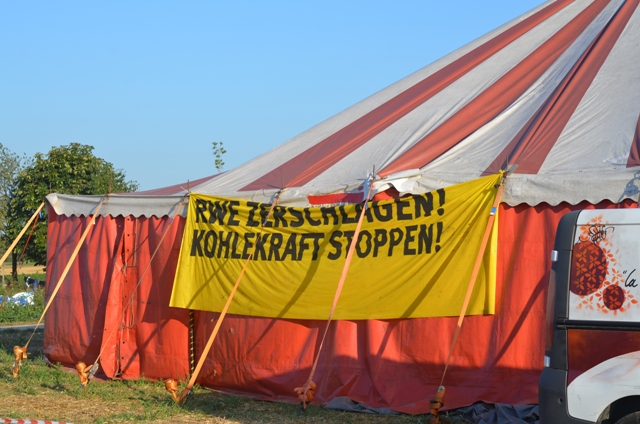
Für unsere Degrowth Konkret - Klimagerechtigkeit Sommerschule 2015 suchen wir noch nach Anbieter*innen von Kursen. Die Sommerschule findet vom 9. bis 14. August 2015 im Braunkohleabbaugebiet Rheinland zusammen mit dem Klimcamp statt. Die Kurse sollen als Herzstück der Veranstaltung 4 oder 2 Tage lang laufen und damit die Möglichkeit zur Themenvertiefung bieten. Eine bestimmte Form oder Struktur ist nicht vorgegeben, sodass viel Raum bleibt für Kreativität. Die Einreichungsfrist endet am 30. April. Wer interessiert ist, einen Kurs vorzubereiten, findet alle nötigen Informationen hier. Zur PDF-Version geht es hier
Anthropological thoughts on degrowth Degrowth energizes and interconnects remarkably heterodox thinking and surprisingly heterogeneous action. To advance dialogue among diverse pathways, a recent Journal of Political Ecology issue on “Degrowth, Culture and Power” joins studies of 15 initiatives to forge worlds that prioritize well-being, equity and sustainability rather than expansion. My intr...
Collaborative creation written down by Constanza Hepp Powered by hardcore conviction, Cooperide is a bloc that will travel from Copenhagen to Paris for COP21, starting November 14. A total of 1400 kilometres in 22 days. And we will do it by bike. Why bike? Simple answer: biking is an autonomous means of transportation free of direct CO2 emissions. It is good for the body and soul, it makes us ...

Die Initiative Psychologie im Umweltschutz e.V. (IPU) veranstaltete im Mai 2014 ihren 43. Kongress. Für den Stream towards Degrowth fragten wir nach, welche Denkansätze Perspektiven von Degrowth und Psychologie im Umweltschutz verbinden. Die Mitglieder der Initiative haben uns darauf ein paar Überlegungen skizziert: beispielsweise machen Praktiken und Denkmuster des Steigerungszwangs uns krank. Ihre gesellschaftliche Überwindung [...]