
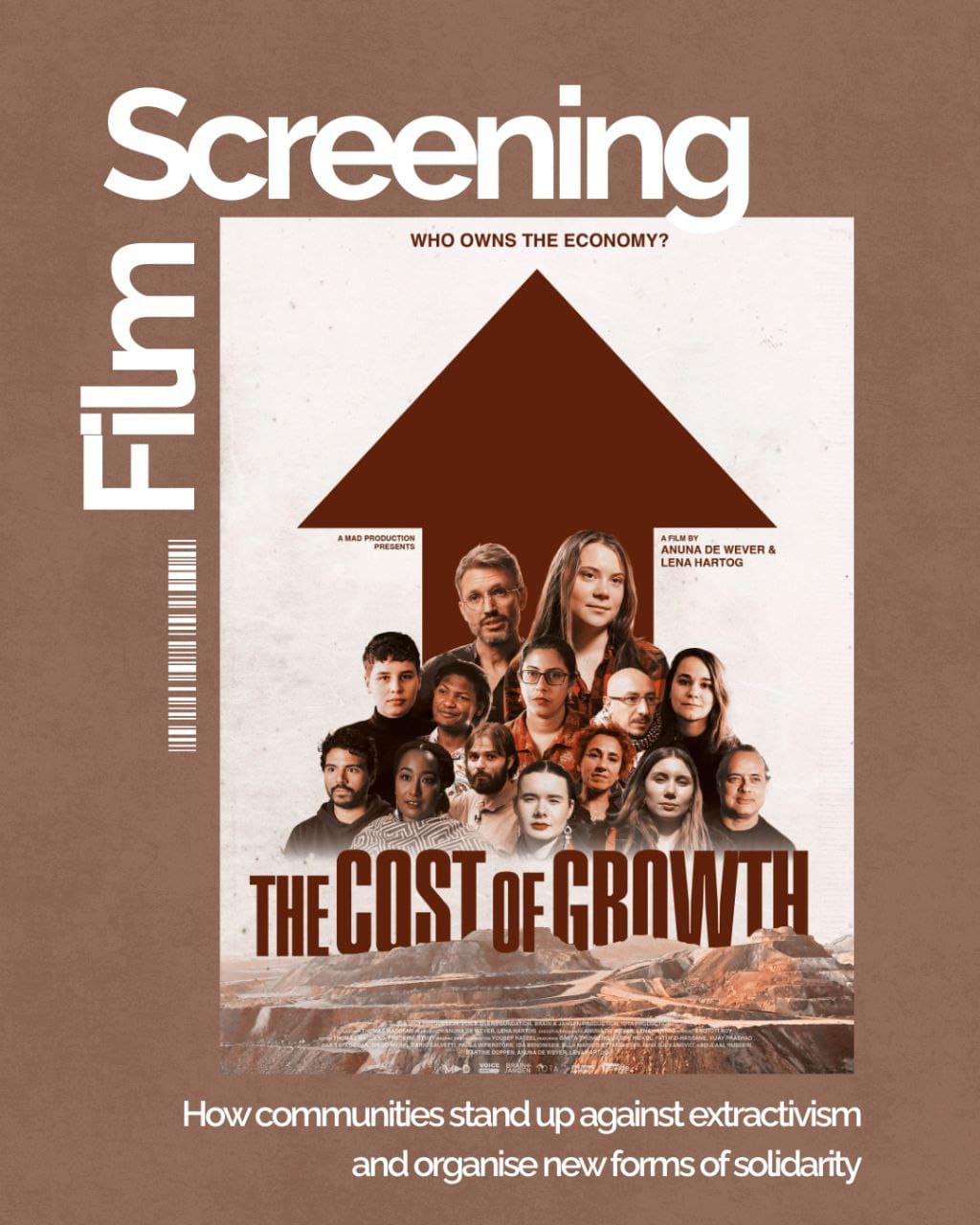
When: between Nov 18th and Dec 18, 2025. And a virtual commentary on 18 Dec, 7-8.30pm (UCT+8)
Where: online
What is the actual price paid by humanity and the planet for endless economic growth?
This film connects local struggles in Europe against extractivism with broader debates on justice, democracy, and building alternatives to an economy not driven by profit, but by well-being.
Join the International Degrowth Network (IDN)'s Asia circle for an online screening of the new and highly anticipated film, The Cost of Growth (2025)!
1. 🎥 Stream the film on Kinema anytime before 18 Dec, 7pm, for USD 1 at https://kinema.com/events/The-Cost-of-Growth-p-h234
2. 💭Join our virtual commentary on 18 Dec, 7-8.30pm (UCT+8), free-of-charge. Sign up at https://tinyurl.com/cogdiscussion2025
The Cost of Growth follows climate activists Anuna De Wever and Lena Hartog as they travel through Italy, Serbia, and Sápmi, documenting grassroots resistance to extractivism. The film connects these local struggles with broader debates on war, justice, and democracy - showing how extractive violence is a form of structural warfare on communities and ecosystems.
Through intimate encounters with grassroots movements, the film weaves together voices from affected communities and leading thinkers—such as Fati N'Zi-Hassane, Vijay Prashad, Greta Thunberg and Jason Hickel - to interrogate who truly pays for growth, how growth is defended and how we move beyond.
This is a 100 % nonprofit project: funding raised through screenings is channelled back to campaigns on democratizing the economy and to support the communities and movements featured in the film.
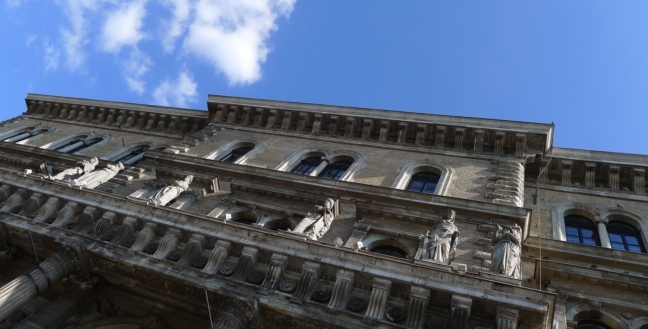
The picture above shows some of the statues decorating the northern entrance of the Corvinus University in Budapest where the recent Degrowth Conference took place. The building has not always been a university. It once was a place of trade, and the statues over the entrance depict virtues which, back then, were considered central to trade. Virtues like courage, faith, love and honesty. When di...
The next International Degrowth Conference for Ecological Sustainability and Social Equity will start on the 30th of August 2016 in Budapest. To take actively part in the conference one can now follow the call for special sessions or one of the the other calls yet to come. There are two special session formats one for “academic special sessions” and one for “degrowth-in-action special sessio...

This Article was written by Jennifer Hinton and Donnie Maclurcan of the Post Growth Institute for the postconference “Stream towards Degrowth”. An annual event, Free Money Day, was created in 2011 and is run by the Post Growth Institute. Each September 15th, people all over the world hand out their own money to complete strangers, two [...]