
We are pleased to announce that registration to the conference is now open and the basic conference programme is available on our website: As of now, it includes seven keynote speeches and more than 20 panel discussions in addition to chosen scientific and artistic sessions. In the course of the coming weeks we will be completing the programme by around 250 further workshops and scientific sessions, so it is worth checking from time to time.
Due to the great interest in the conference and the necessary limitation of participants we recommend to register as early as possible. However, many speeches and discussions will be video-streamed and published on our website for whoever will not be able to come to Leipzig.
In order to also enable people with little income to participate, the conference fee can be freely chosen based on our recommendations. We also offer cheap accommodation options such as camping and staying at private places. There will be vegan and regional food provided by a local cooperative.

Degrowth addresses the negative consequences of consumerism (psychological stress, long working hours and positional competition) and discusses the benefits of frugal lifestyles. Henri Lefebvre, a French philosopher from the 20th century, argues that if ideas or values are not physically implemented in space, they become mere fantasies. As such, if degrowth wishes to prevail, it has to leave it...

Dear Life, I was not aware, when I was born, that I was born onto a battlefield. I was not aware, as I learned to walk, that I was stomping over the habitats of many creatures. I was not aware, as my mother drove me to school, that we were riding roughshod over the unmarked graves of our fellow humans. I was not aware, as we flew around the world, that I was attacking my child’s chances. I was...
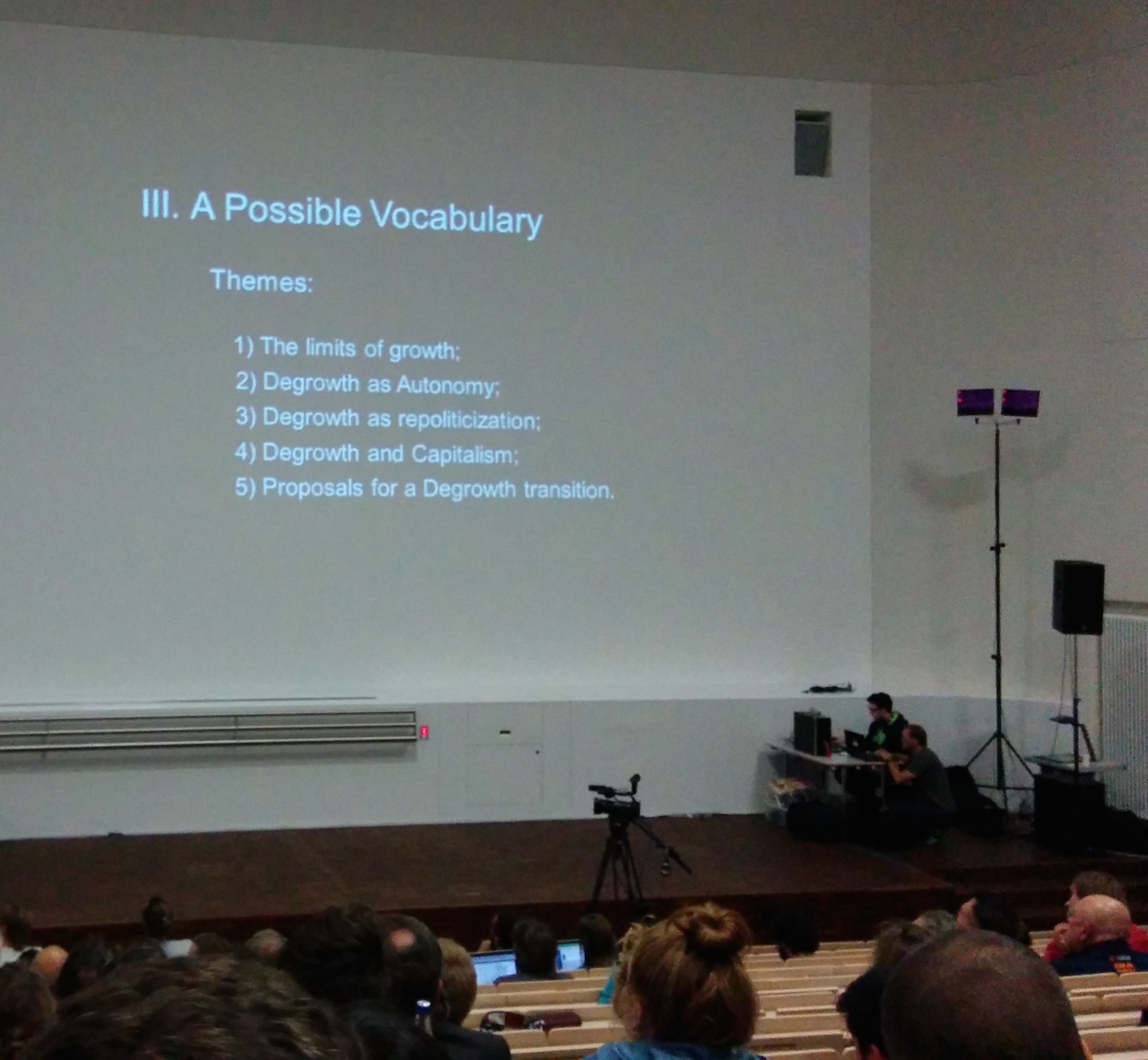
By Chris Ward Despite attending the conference, not everyone will fully understand what ‘Degrowth’ is, or the multitude of related terms that will be mentioned during the conference. Thankfully the first session on the schedule, offered by Federico Demaria and Giacomo D´Alisa was ideally suited for getting your knowledge up to scratch. Judging by audience responses to the question “What ...