

“Wirtschaft ohne Wachstum” – so lautet erneut das Ausschreibungsthema für den Kapp-Forschungspreis für Ökologische Ökonomie. Der Preis ist mit 5.000 Euro dotiert und richtet sich an junge Wissenschaftlerinnen und Wissenschaftler der verschiedensten Disziplinen. Die Bewerbungsfrist endet mit dem 1. März 2016. Weitere Infos gibt es hier oder auf der Website der Vereinigung für Ökologische Ökonomie (VÖÖ)
Collaborative creation written down by Constanza Hepp Powered by hardcore conviction, Cooperide is a bloc that will travel from Copenhagen to Paris for COP21, starting November 14. A total of 1400 kilometres in 22 days. And we will do it by bike. Why bike? Simple answer: biking is an autonomous means of transportation free of direct CO2 emissions. It is good for the body and soul, it makes us ...
Leben im Bauwagen von Marc Menningmann auf Vimeo Der Fotograf Nico Baumgarten öffnete während der Degrowth Konferenz in Leipzig seinen Bauwagen für Passant_Innen. Wer wollte, konnte sich einen Eindruck von seiner Lebensweise machen und seine Fotoserie "Welcome Home" anschauen, die sich mit alternativen Wohnformen beschäftigt. Im Film erzählt er, was ihn zu dieser Aktion motiviert hat, un...
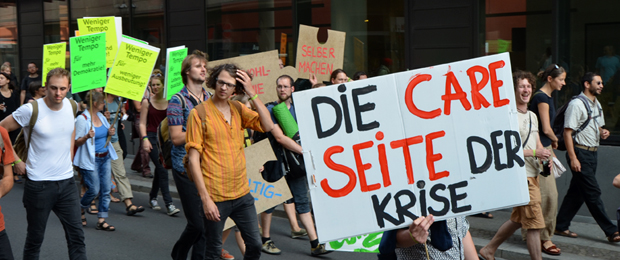
Von Ulrich Schachtschneider Mit der Degrowth-Bewegung ist ein neuer Stern am Himmel der sozialen Bewegungen erschienen. Doch die traditionelle Linke beobachtet diese Neu-Erscheinung etwas kritisch – ist es doch ein Aufbruch, der auch ohne sie möglich erscheint. Es fehlten die marxistischen, feministischen und antirassistischen Analysen und die entsprechenden Parolen. Wo sie doch kamen, wurden ...