
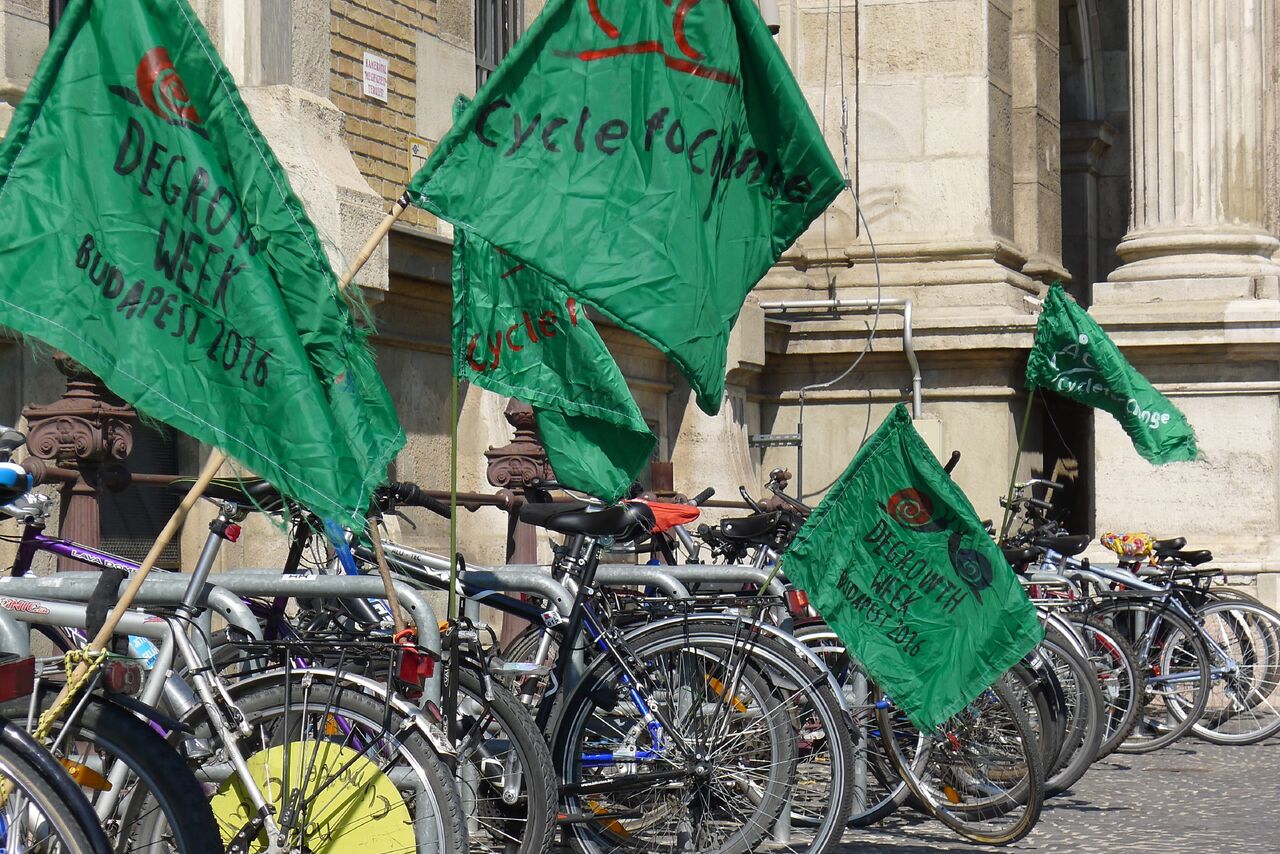
Von Tilman Santarius
Degrowth-Konferenzen sind nicht nur spannend, weil dort ganz drängende Fragen unserer Zeit mit meist sympathischen Menschen in bunter Zusammenkunft aus Süd, Ost und West diskutiert werden. Sondern auch, weil dort unterschiedliche Formate und Herangehensweisen, wie gesellschaftlicher Wandel ins Werk gesetzt werden können, unter einem Dach diskutiert werden. Weiterlesen auf dem Blog Postwachstum

This article is part of a series on degrowth.info discussing strategy in the degrowth movement. The introduction to the series and an ongoing list of contributions can be found here. In the article “Beyond visions and projects…”, by Herbert, Barlow, Frey, Ambach, and Cigna, the authors persuasively set out the case for a more explicit debate on strategy in the degrowth movement. Highlighting...
Der Wohlstand Mitteleuropas, unser hohes Mobilitäts- und Konsumniveau, gründet auf drei industriellen Revolutionen, deren technischer Fortschritt die Arbeitsproduktivität ständig erhöht hat. Die Folgen sind paradox: Einerseits können mit dem gleichen Arbeitsaufwand immer mehr Güter produziert werden, und die breite Masse der Bürger kann sich dank Lohnerhöhungen immer mehr leisten. Andererseits ...

Interview mit Anna Holthaus Anna Holthaus ist Vorstandsmitglied der BUNDJugend. Seit 4 Jahren engagiert sie sich in der BUNDJugend dafür, die Schritte für einen sozial-ökologischen Transformationsprozess und eine Gesellschaft ohne Wachstum anzusteuern. Erfreulicherweise ist die BUNDJugend ein wichtiger Unterstützer der Degrowth-Konferenz in Leipzig. Im Rahmen der Interviewreihe des Projekts “Stream towards Degrowth” blickt Anna Holthaus aus [...]