
More than a year ago the 4th International Degrowth Conference for Ecological Sustainability and Social Equity took place in Leipzig. Now the jubilee video "Metamorphoses" is available with english subtitles:
Metamorphosen [Metamorphoses] from Marc Menningmann on Vimeo.
At the opening of the Degrowth Conference 2014 the sound-artist Pablo Paolo Kilian preformed his piece of music "Metamorphoses“. He was accompanied by Melanie Bleckert, who created the analogous ligh-motive colour-compositions developed by Matthias Strobl, which were projected on the wall of the Audimax at the University of Leipzig.
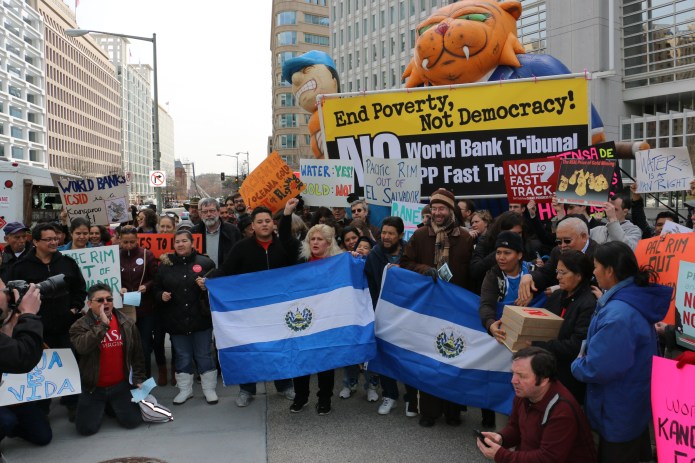
International corporations are decimating nature, destroying lives and manipulating opinion. Here's how to stop them.. A US engineering giant sneaks into a Bolivian city under an assumed name and takes over its public water system. A Canadian mining company seeks control of El Salvador’s gold even at the cost of poisoning its drinking water. An Italian energy conglomerate floods ...

The topic of population growth is often omitted from any debate regarding environmental impact in all academic circles ranging from classical to heterodox. While it is undeniable that the global population is increasing and will continue to increase for some time, no serious address towards the seemingly obvious relationship between population growth and environmental degradation is directly di...
On 14 March the last submission period closed for contributions to the conference. After a first quick review it was already clear that all expectations were far exceeded: more than 350 scientific papers were received from a broad range of disciplines such as economics, psychology, geography and urban planning. Further 260 proposals for practice-based activities were submitted by various civil-...