
It´s now the second time that the Degrowth Summer School will take place at the Climate Camp in the Rhineland. While last year´s event was under the banner of climate justice, this year it is called „skills for system change“. We´ve asked Christopher Laumanns from the organizing team about the reasoning behind it and what to expect at the camp.
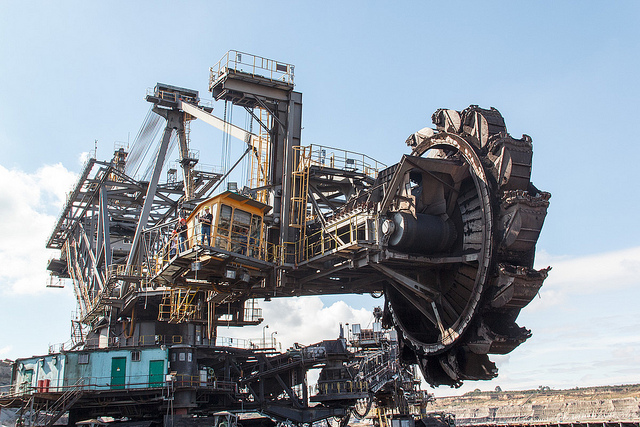
Because there will be no climate justice without degrowth in the global north and there will be no relevant degrowth movement if it doesn't put its ideas into action. The climate camp in the Rhineland's lignite mining region is a great place to give degrowth concepts a reality check.
Yes. Last year was the first time the Summer School came to the Climate Camp, so we focussed on the meeting of degrowth and climate justice, on the common ground and differences between the two movements and concepts. Within this last year, the degrowth movement has become more activist and the climate justice movement has become a lot stronger. So, we thought, we the people in these movements need certain skills to make the system changes that we want to see. That's why we're focussing on these practical things, like founding a cooperative, facilitating consensus decision making, creating political campaigns or building stuff with our own hands. But last year's event isn't the only thing. Not just our movements, also Europe is changing very rapidly at the moment. From inspiring developments like the summer of migration to scarier ones like the rise of right wing populism. We need to analyse these changes and discuss our strategies. That's also a skill for system change.
If we want to make political changes, we need to build strong movements that can inspire people and put pressure on institutions. For that we need a whole host of skills: We need the right analysis, know where we want to go and think strategically about how to get there. We need to know how to set up political campaigns and deal with possible adversaries and the press. And in order to do all this without going nuts, we also need to be nice to each other, care for each other and communicate our needs. And get those damn narratives of competition and growth out of our heads and replace them with something connected to our surroundings. The programme of the Summer School and the Climate Camp reflects all this.
Of course, it's a climate camp! There's lots of workshops on or related to climate justice. The climate camps rest on four pillars: networking, education, self-organization and direct action. As far as I know, they're all supposed to contribute to climate justice.
We'll have less events and more space as well as special topics for discussions with the whole camp. That's because we felt that last year the programme was very large, maybe a bit overwhelming.
We have 375 registrations in total and I don't know right now how many are from countries outside of Germany. But don't we want to leave the nation-state behind us anyway? It'll be quite transnational, I can promise that.
You can still come to the camp! Registration was only necessary for the Summer School's courses, which are indeed full. But the courses are only one part of the programme, there's so much more going on: workshops, lectures, panel discussions, films, concerts and much more! If you can't come, yes, keynotes and panel sessions will be recorded, but not streamed. We'll upload them as soon as possible though. And we'll also be producing other videos later on.
We all use models in daily life to explain our environment. An example: I assume that a tree will grow provided it has sufficient water, nutrients and sun. I am using a simple model here, without understanding the nitty-gritty – what exactly happens in the roots, stem, leaves and cells. Thinking in models is not only useful to understand our world, but also to solve problems. Let’s assum...
In two statements, internationally renowned climate-activists Naomi Klein and Bill McKibben have raised their voices to support the mass-action against coal-mining in the Rhineland that will take place right after our summer school. Naomi Klein, author of "This changes everything. Capitalism vs the Climate" emphasizes the importance of the German anti-coal struggle for the global climate: "Ge...

Attempts to integrate economics and ecology have been based on one of three strategies: (1) economic imperialism; (2) ecological reductionism; (3) steady-state subsystem. Each strategy begins with the picture of the economy as a subsystem of the finite ecosystem. Thus all three recognize limits to growth. The differences concern the way they each treat [...]