
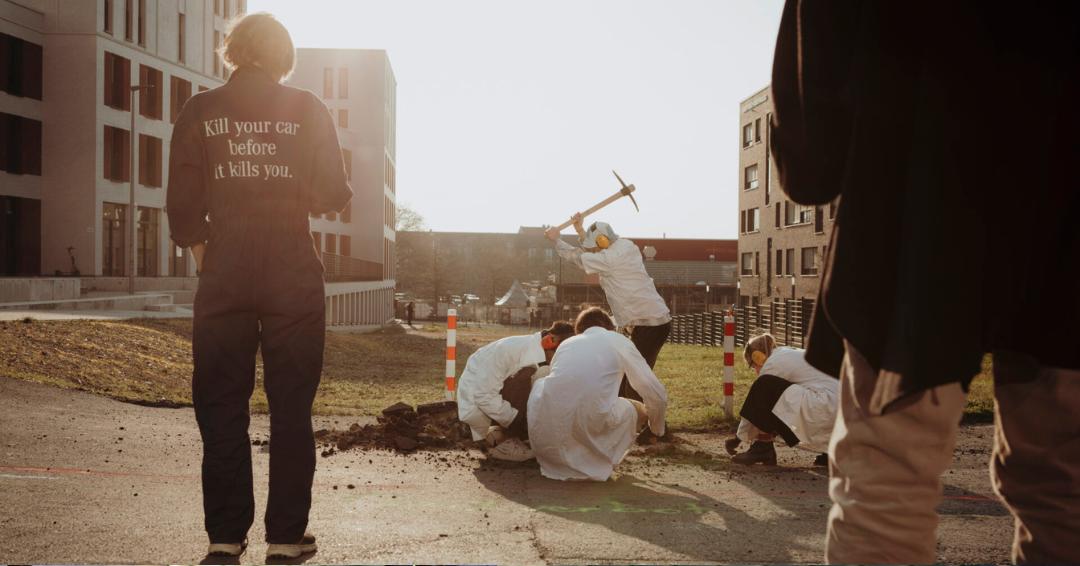
Folke Köbberling and „test phase #5“. Photo by Sarah Ruholl.
High expectations are put on the transformational potential of arts in the context of socio-ecological change. Art should increase people’s attention to environmental issues, share knowledge in innovative ways, and motivate people to take action. Using the art project “test phase #5” by Folke Köbberling as an example, I ask whether and how participatory art can spark ideas that challenge growth-driven thinking and, in doing so, contribute to social and ecological urban development.
“Test phase #5” combined participatory art with a real-world intervention into the public space of the museum's surroundings, as a criticism of current urban sealing. Sealing means covering the soil in a way that inhibits water and gas exchange with the atmosphere. It comes with serious ecological, social, and health consequences, and it raises questions about the inequality of its negative effects. Sealing isn't just a technical problem; it's a result of growth-oriented city planning, where land is mainly valued for its economic use, for example, as real estate, industry, or commercial space, while the role of public spaces as places to live, meet, and relax is treated as less important. Unsealing land challenges this logic. It can mean deliberately giving up economic value in favour of non-commercial, shared uses. For many years, Folke Köbberling has used site-specific art interventions to playfully, aesthetically, and provocatively draw attention to problems in urban planning and land use. Similar unsealing projects have taken place in Bonn, Vienna, and Chemnitz.
Clara Niermann initiated “test phase #5” at the Museum Ostwall in the Dortmunder U, as a researcher and part of the project "Green for Everyone?" at the Institute for Ecological Economy Research (IÖW). Clara and my observations and conversations form the basis of this article.
In the last week of March 2026, neighbours, passersby, and interested visitors were invited to try breaking up asphalt using simple tools, hammers and chisels. The chosen area for unsealing had previously served as several informal car parking spots. Around 100 people actively took part in „test phase #5“, collectively unsealing 6 square meters, roughly half the size of an average parking lot.
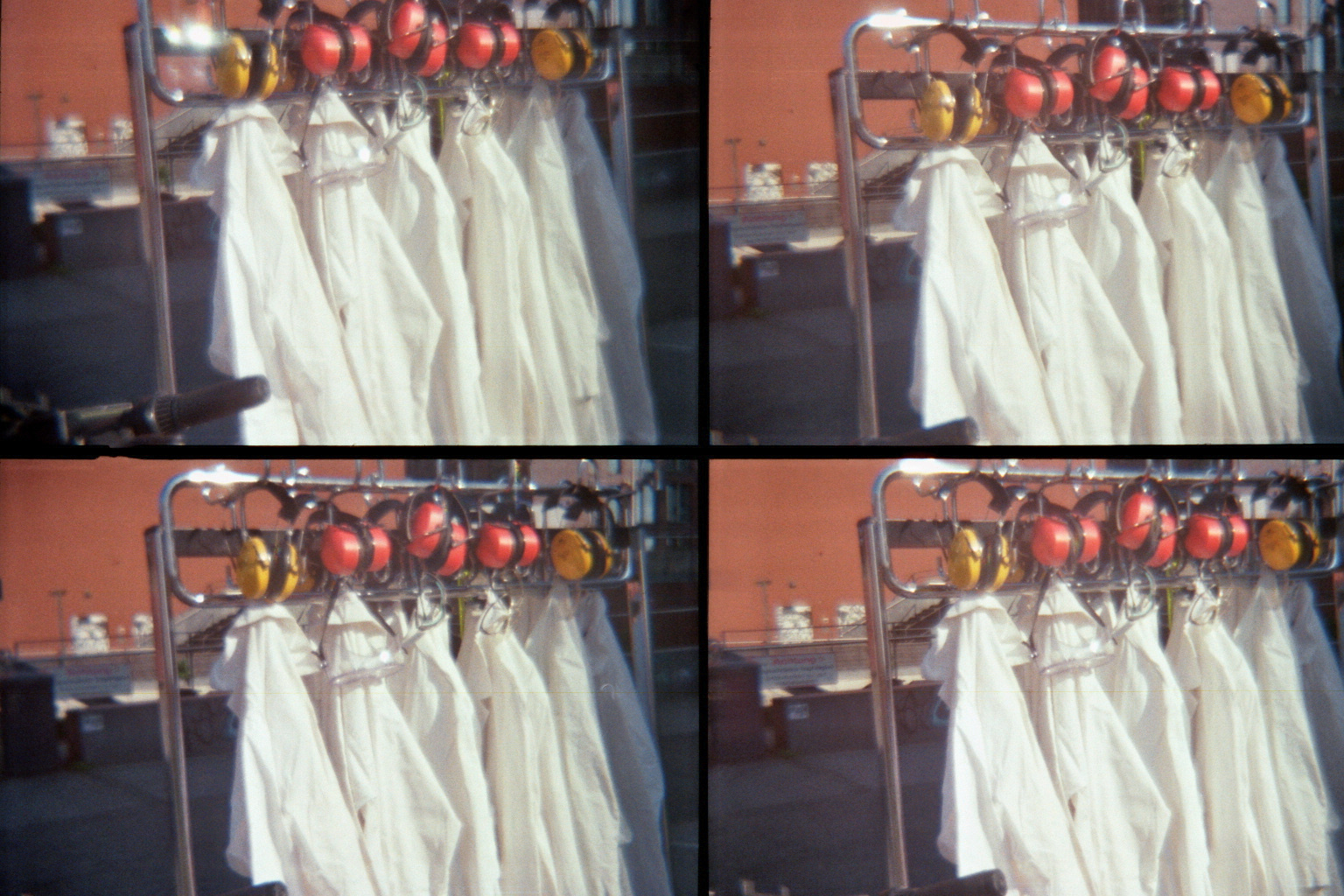
Protective clothing, Photo by Mia Lehn.
On the first day of „test phase #5“, a colleague and I interviewed fourteen participants about their experiences during the unsealing; among them were three museum staff members and four members of local environmental initiatives. Most of the interviewees were interested in art and supported socio-ecological urban development. During the project week, a few random passersby, such as employees of the nearby restaurant or students from the neighbouring school, participated, though they were not interviewed.
A large number of those interviewed reported feeling exhausted and frustrated as they tried to “hammer against” the seemingly unbeatable asphalt with simple tools. The tools struggled too, groaned under the strain and occasionally broke, reinforcing the apparent impossibility of the task. This physical effort made participants more aware of the injustices in city planning, and how much strength and persistence are needed for change. Several people expressed anger at how quickly land gets sealed by machines, compared to how exhausting it is to reverse the process.
Some described the shared work as connecting and felt effective because they could directly see the results of their individual and collective efforts. Others felt powerless against the hardness of the asphalt. Some described feelings of curiosity and competitiveness: What lies beneath the asphalt? How much of it can I break open? At times this led to humorous attempts of men to demonstrate their strength. A few found the repetitive physical work almost meditative. This indicated a class conflict. Many participants came from academic backgrounds and saw the physical labour as a welcome change in their daily routines. In contrast, construction workers passing by pointed out that this kind of work was part of their everyday job and that they would never choose to do it voluntarily in their free time with simple tools.
On a broader societal level, interviewees perceived their ability to influence urban politics as present, though limited, and their participation in the art project was unrelated to this judgement.
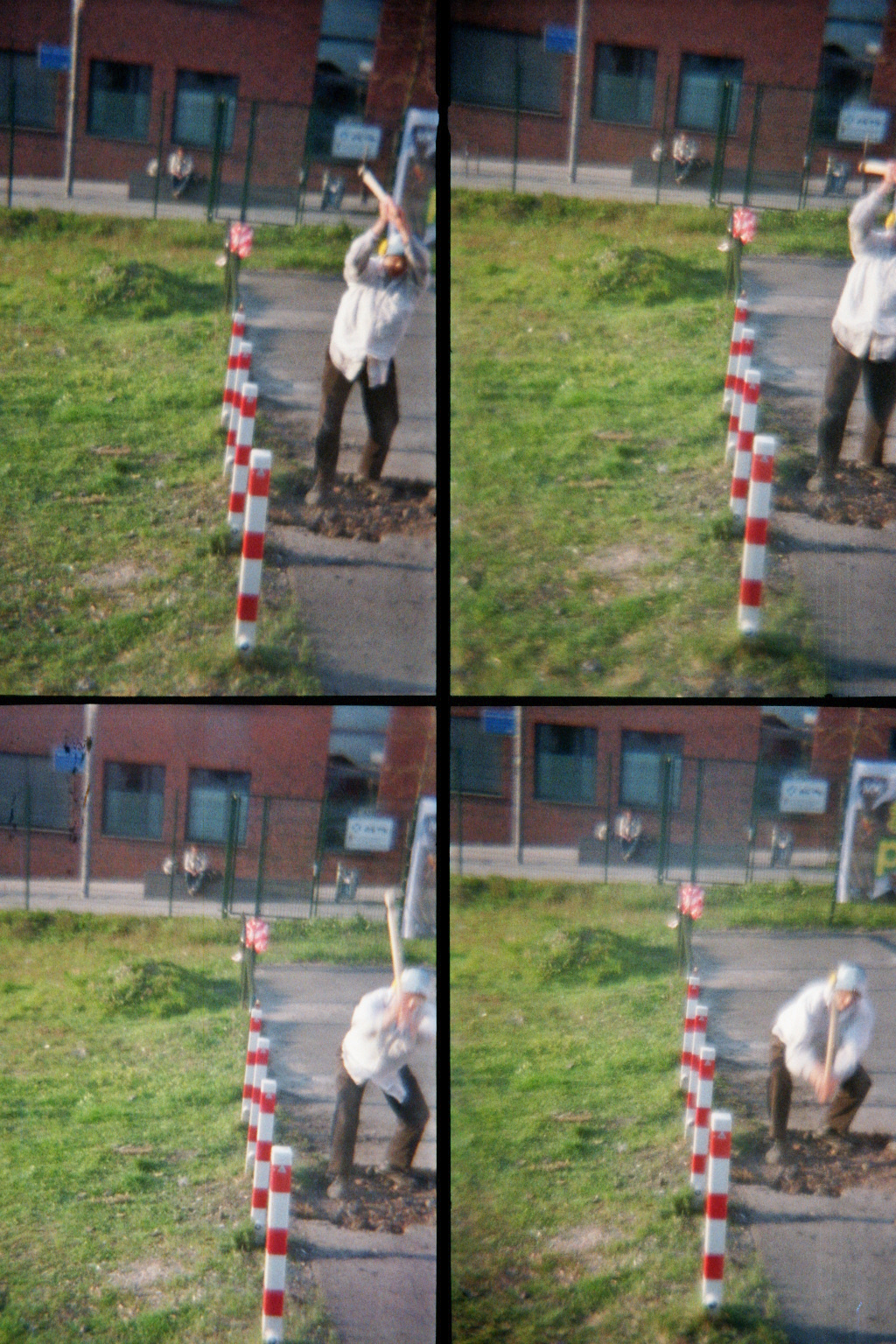
A person breaking up asphalt with a pickaxe. Photo by Mia Lehn.
The museum team anticipated conflicts, since earlier unsealing projects by Köbberling led to confrontations while changes to street space in general, particularly those involving the removal of parking spaces, are known to create tension between different groups. On the second day, neighbours indeed expressed concerns that the project was blocking emergency escape routes, even though they had previously supported it. After checking with the municipal administration, „test phase #5“ was permitted to continue. No further complaints followed. Still, the museum staff remained somewhat puzzled, since the area had often been blocked by parked cars anyway, and the motivation behind the complaint remained unclear. This incident shows the different and sometimes unexpected ways conflict over public space can surface. It also mirrors dynamics commonly observed in climate policy: public support for abstract climate goals is often high but declines once specific measures affect everyday life. People also tend to prefer the status quo.
„Test phase #5“ didn't unseal a large area, but it did draw attention to the problem of land sealing. It created powerful images of people actively caring for their environment. Although media attention to the project was limited, it seemed to build critical awareness among participants. Physically breaking through asphalt demonstrated how contemporary urban development is shaped by resource-intensive practices, hostile built environments, and speed, while highlighting limited individual power to change things (see Landau & Toland's work for a discussion of this). Simultaneously, collectively breaking up the asphalt allowed for reclaiming public space and demonstrating that cities can be reshaped bottom-up through persistence and collective effort (see also Fedel and Kagan’s work).
Viewed through the lens of the Social Identity Model of Collective Action „test phase #5“ appears to have the potential to mobilise people, identifying three key drivers that motivate people to get politically involved: identifying with a group, feeling outrage about injustice, and believing that collective action can make a difference. The art project was linked to these factors and had a direct motivating effect on three people who intend to become more engaged with sustainable urban development, whether through changes in their private lives or through participation in environmental groups. However, since many participants were already actively involved in environmental groups, the action’s potential to mobilise new people was limited. This reflects a common challenge for environmental projects. The hope that art would reach a broader audience didn’t hold up, at least on the first day. Nevertheless, „test phase #5“ successfully connected people from different environmental contexts and created opportunities for mutual encouragement, importantly showing some, “I'm not alone.”
Do art actions help reduce conflict around street space redesign, since art could be viewed more positively and less radical than purely activist actions? Research has mixed results (see Barkela and Stammen & Meissner's work). Agonistic conflict theory says that conflict can be a productive social force, with art serving as a starting point for constructive negotiation.
We must also reflect on the art world itself, which remains deeply embedded in growth-oriented logics and causes environmental harm, while cultural institutions can simultaneously play an important role in communicating social and ecological issues. In the case of „test phase #5“, the project strengthened the commitment of the museum staff interviewed to continue addressing these issues within their institution and to engage more actively in city politics. Repeating Köbberling's unsealing project also challenges the common expectation that artistic practice must constantly produce novelty. Instead, it shows that change and new insights sometimes come from repeating something that already works.
The lessons from „test phase #5“ suggest that art projects are particularly effective when they translate abstract issues into embodied experiences, enable people to act together, and visibly intervene in public space. It also shows that cultural institutions can serve as mediators and spaces for dialogue around social and ecological topics. At the same time, it's important to remember that art alone won’t solve the deeper structural problems behind our current way of life and shouldn’t be expected to do what other actors or fields likewise struggle to achieve.
After the project, the city planning team planted the repaved area. However, for the plants to thrive, someone will need to take ongoing care of the site. A participatory process to redesign the space is planned for the future. Moreover, „test phase #5“ has been registered for a nationwide competition „Abpflastern“, which encourages cities, municipalities, and initiatives across Germany to unseal unnecessarily sealed surfaces. This blog post is meant to encourage others to implement similar projects elsewhere. Folke Köbberling remains open to future collaborations.
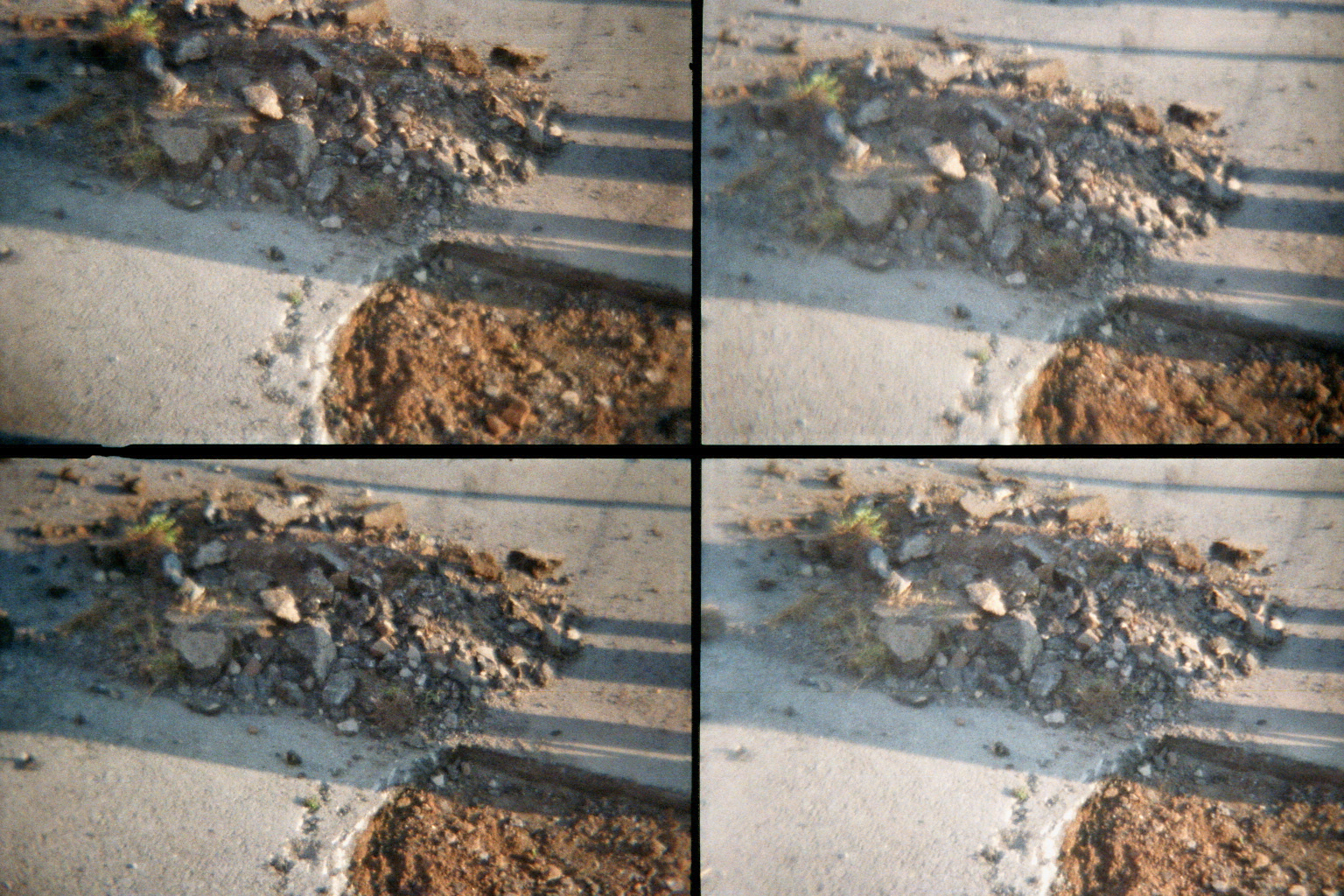
The unsealed area after the first day of „test phase #5“. Photo by Mia Lehn.
A German version of this article is accessible on PostWachstum.de
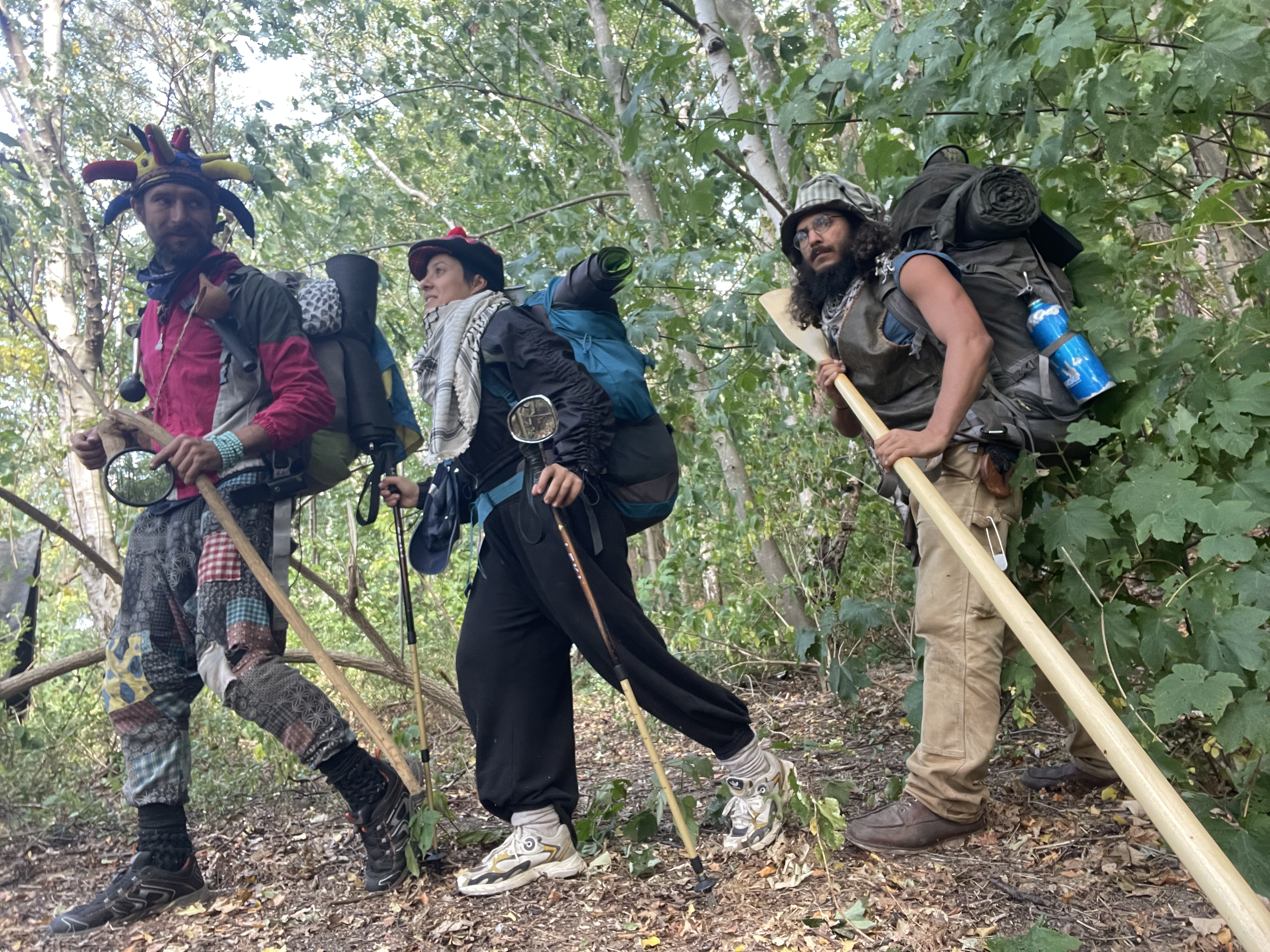
At the end of the Degrowth Cabaret at the ISEE Degrowth Conference in Oslo, a handful of conference attendees started a backwards walk from Christiania, Oslo, to Christiania, Copenhagen. Degrowth.info talked to them to learn more about this peculiar feat.

Only days away from Christmas, Hannah Morris deplores its co-optation into a capitalist fiesta.
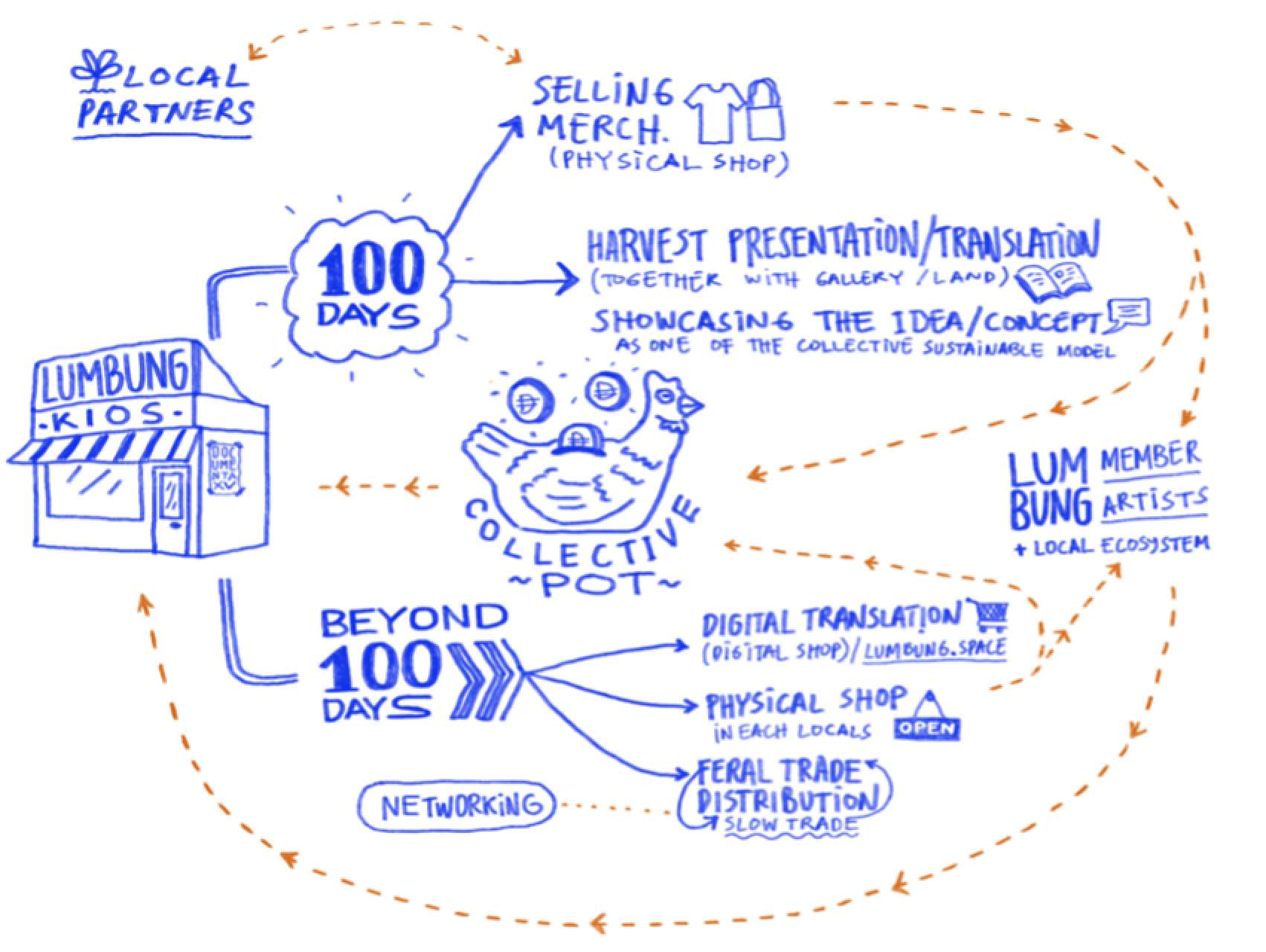
In 2022, art collectives and curators of documenta15 restructured the practice of producing and presenting art: away from classicism and economical individualism towards a culture of commoning knowledge, sufficiency and embodied community. Is documenta15 thus a degrowth art event? Yes, to some extent. The way it failed demonstrates an important lesson for the degrowth movement.